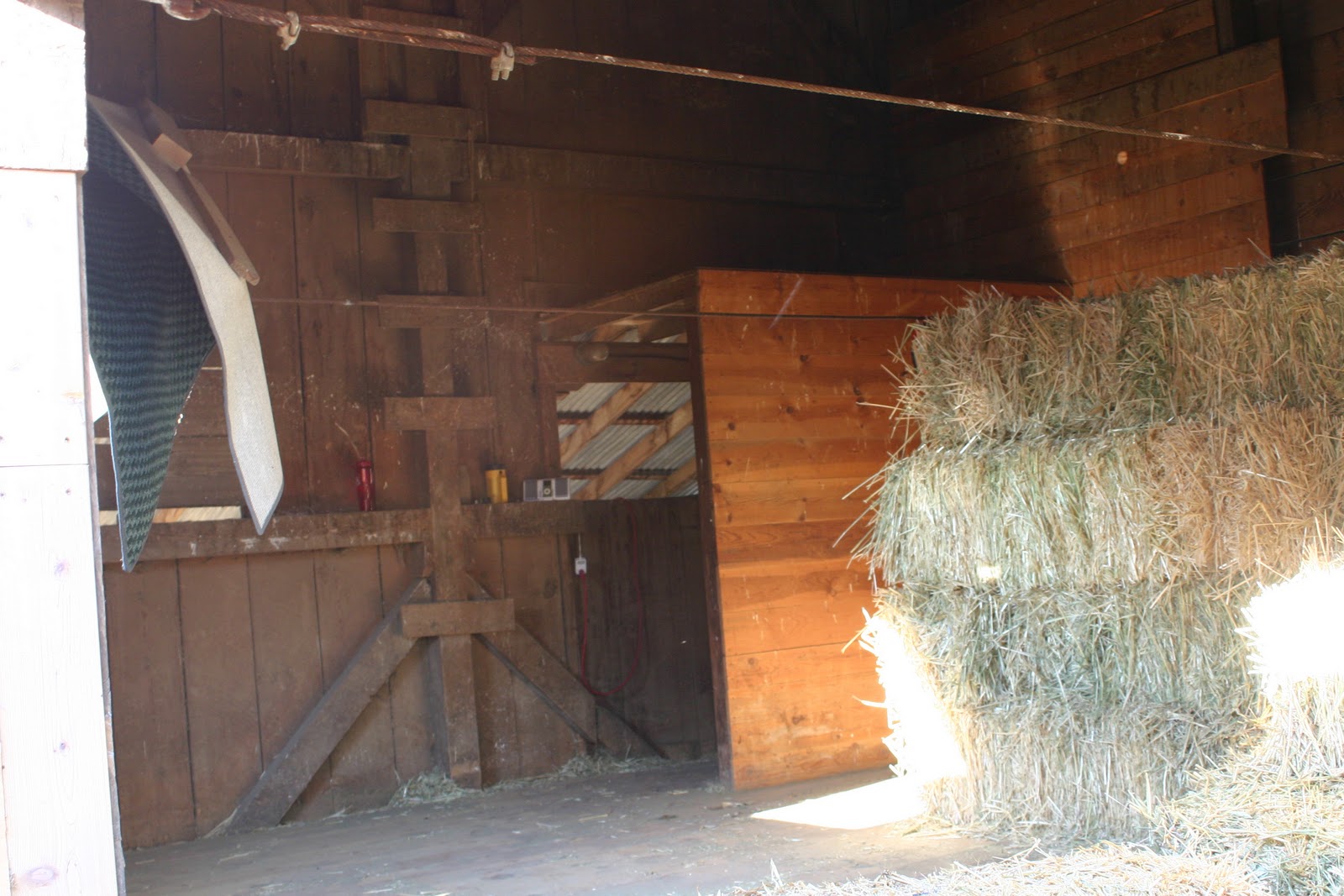
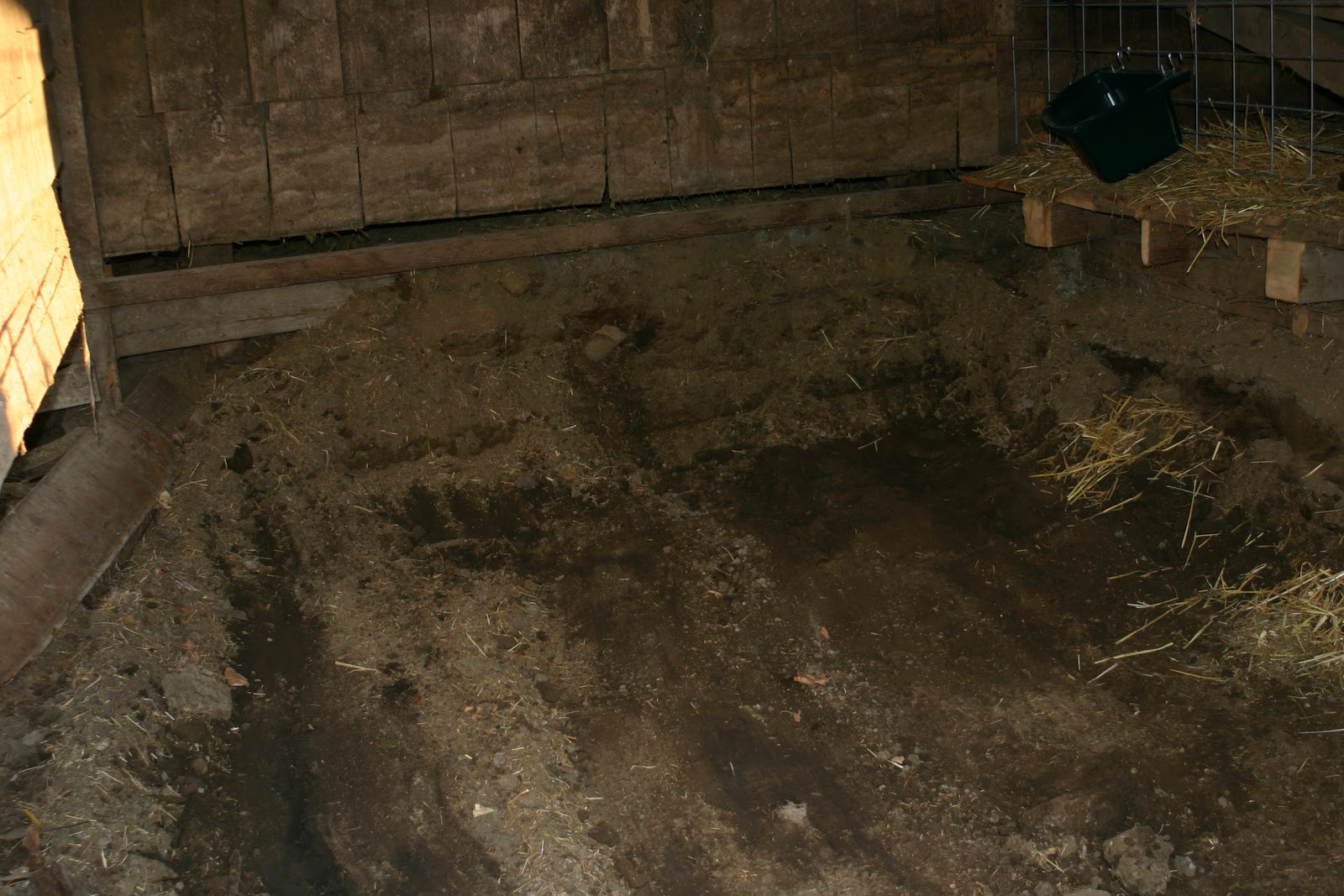
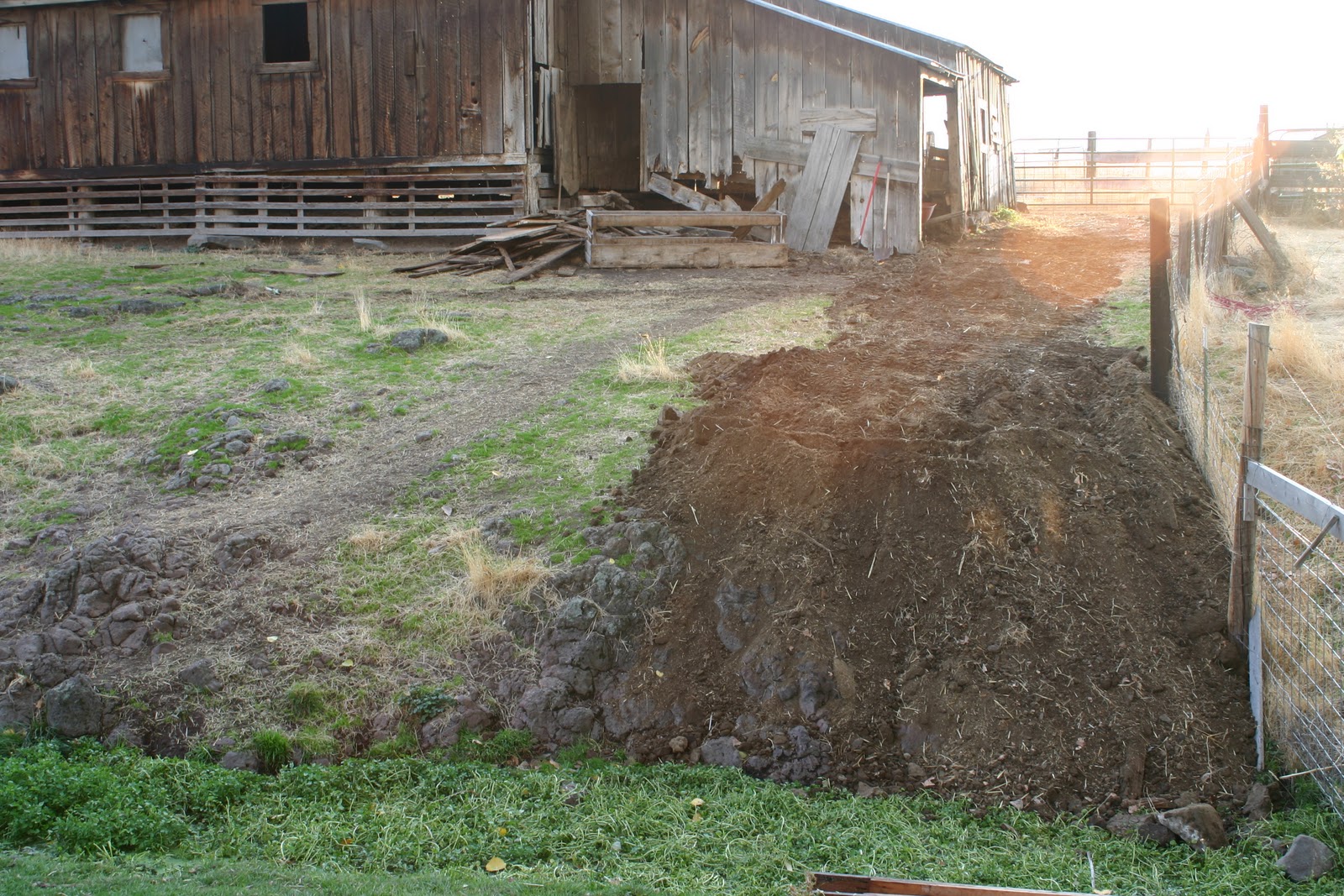
Second bunch of hay in shed

storage area starting point

The second pile of hay is in the barn.  Everything ran the way it normally does for me.  My help showed up on time and we started to clean out the hay area.  Once the chutes were maneuvered out the door I had him jump in the pickup so I could drive the hay over to the house.  Amazingly, the truck started fairly easily.  I had to drive into Pilot Rock and weigh the truck on the scales.  We needed to know how many bales are in a ton.  I drove to town and my help (further known as Mr President) went back to the barn to finish cleaning it out and getting it ready.  The truck weighed 5150 lbs (done a couple of weeks ago), full of hay it was 12050 lbs.  90 bales weighed 6900 lbs or about 77 lbs/each, 10 ton of hay = 260 bales.  There are currently 180 bales in the barn.  I need another 80 bales.  I was pulling away from the scale when the truck started to die.  Truck ran out of gas.  Since the gas gauge doesn’t work it shouldn’t be a surprise.  I placed a call to Mr. President on his cell phone, I wanted him to bring the pickup and a gas can.  He is the only teenager I know who doesn’t carry his cell phone on him.  I ended up walking to the hardware store, buying a gas can and walking to the gas station.  The gas station owner let me use his pickup to take the gas to the wheat truck. While I was pouring gas into the tank the cheesy little plastic tube that directs flow fell into the gas tank.  I got out to the house and the truck died right outside the barn lot gate.  Damn thing would not start again.  I tried multiple times to jump start the truck with no luck.  So I brought the new tractor out all 23 hp.  I hooked onto the loaded wheat truck and pulled.  In four wheel drive it pulled the truck.  Mr. President was driving the non-powered large loaded wheat truck with specific instructions to pump the brake pedal to build up pressure so he can stop.  We made a large circle in the barn lot and the chain came loose.  I kept pulling but the path to the barn at this point is slightly downhill.  All of a sudden the wheat truck started to get away and come at the tractor.  I ended up having to dive to the left in the tractor to avoid getting hit by the wheat truck.  I was screaming at Mr. President to “pump the brakes”.  He managed to get the truck stopped directly over the chain.  I ended up just going behind the truck and pushed it forward about six feet.  The real work began. 

Ready for more hay.

We started unloading and making the pile taller.  We needed to leave room for the next 80 bales that are still needed.  Once the stack gets taller than 6 bales high it started to get painful to drag those bales up to the top.  Annmarie came over and was talking to us when we found a snake on the truck buried in the hay.  It was a bull snake, Annmarie stayed far away.  I just tossed it on the ground so it could go eat more mice and bad snakes.

My “farm” tractor and its load.

Bales stacked eight high.

Hay is arriving

I started the morning by driving into town to get a new battery for the pickup.  The hope was a new battery would fix everything with the pickup so I could use the pickup to start the wheat truck.  A battery was all the pickup needed.  I drove it over to the loaded wheat truck and gave the truck a jump start.  It worked!!  I left the pickup there and drove the loaded truck over to our house.  I pulled up alongside the new outside barn door.  I was about four feet away from the barn with the middle of the truck just opposite the door.  So I pulled down five bales of hay and used them to fill the gap.  That way I can just walk across the bales directly to the truck.  I had not planned on unloading the whole truck.

I ended up unloading the whole truck, 90 bales (approx 3.5 tons).  I started to get tired about half way through.  Actually, tired is an understatement.  I wanted to die.  This is the third day of hard manual labor and it felt like someone was hitting me across the upper back and shoulders with a 2×4, repeatedly.  I ended up stacking the bales four high!  The biggest problem is I need to clean out the rest of the space to make room for just this year’s hay.  I actually just threw the last six bales inside the door and did not stack them.  Yes, I used my legs when lifting the bales onto the stack.  I never could have done it with arm power only.  So I made the call and have a teenager boy coming to help me on Wednesday.  We are going to clean out the rest of the barn and unload another 90 bales of hay.  If we have time the horse area will get finished.

Of course, the chicken butler failed again.  Sarah went out to get eggs and the chicken butler had not opened all day.  The chickens had no water and were not happy.  She only collected 3 eggs.  She also forced the chicken butler door open not helping its functioning at all.  I went out to trouble shoot it and couldn’t get anything to work.  So I took two five gallon watering buckets and mounted them in the chickie enclosure so that if they get locked in water will be available.  While I was in said enclosure I happened to look over at my wire/rock barrier.  A small hole with a worn path had been created under the wire and next to a large rock.  I had to go grab two more large rocks, beat down the wire and pile two rocks over the area.  Now we have to go out every night and lock the chickens up and let them out in the morning. 

Projects multiply

Everyone in the ram pasture today.  The sheep had been roaming.

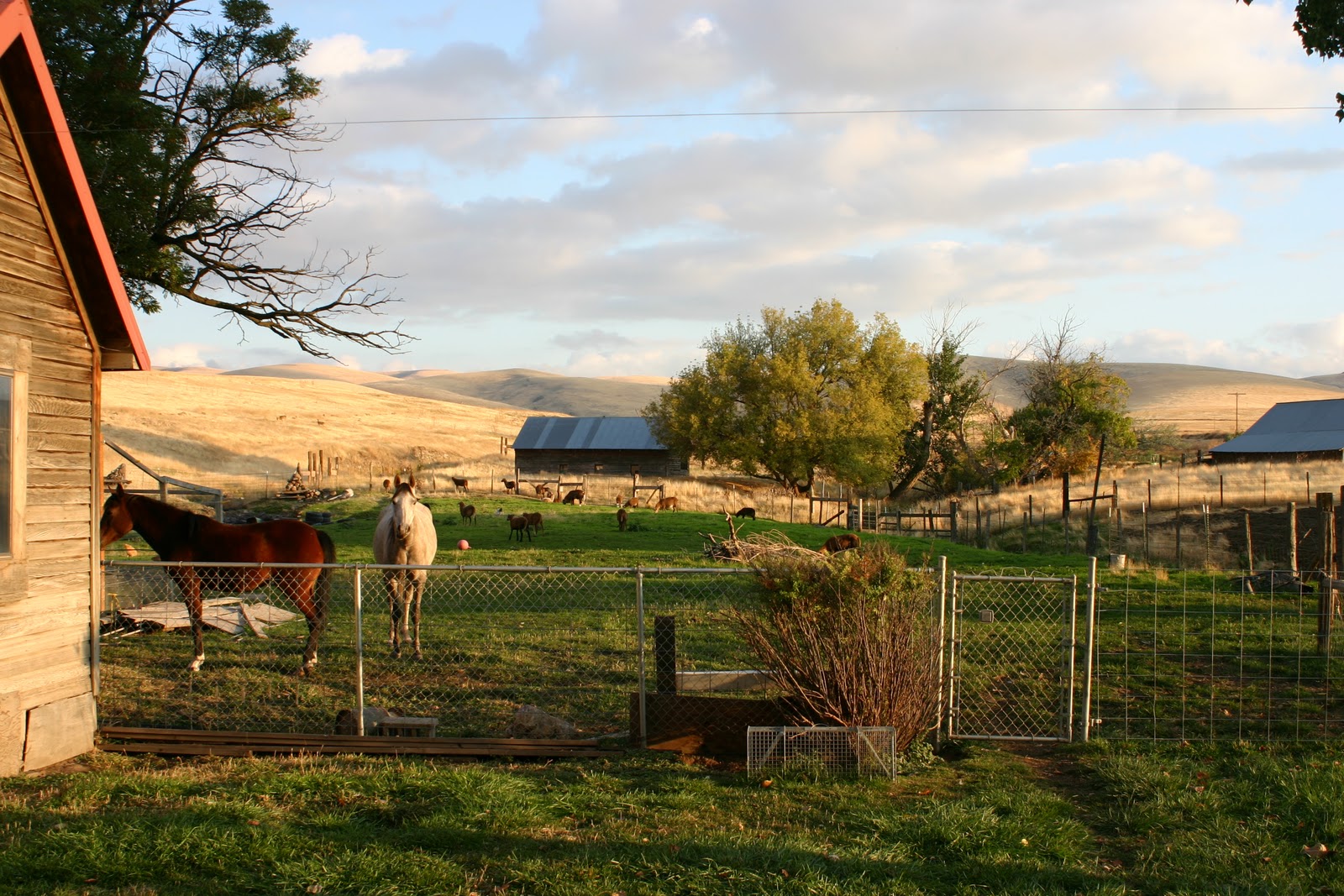
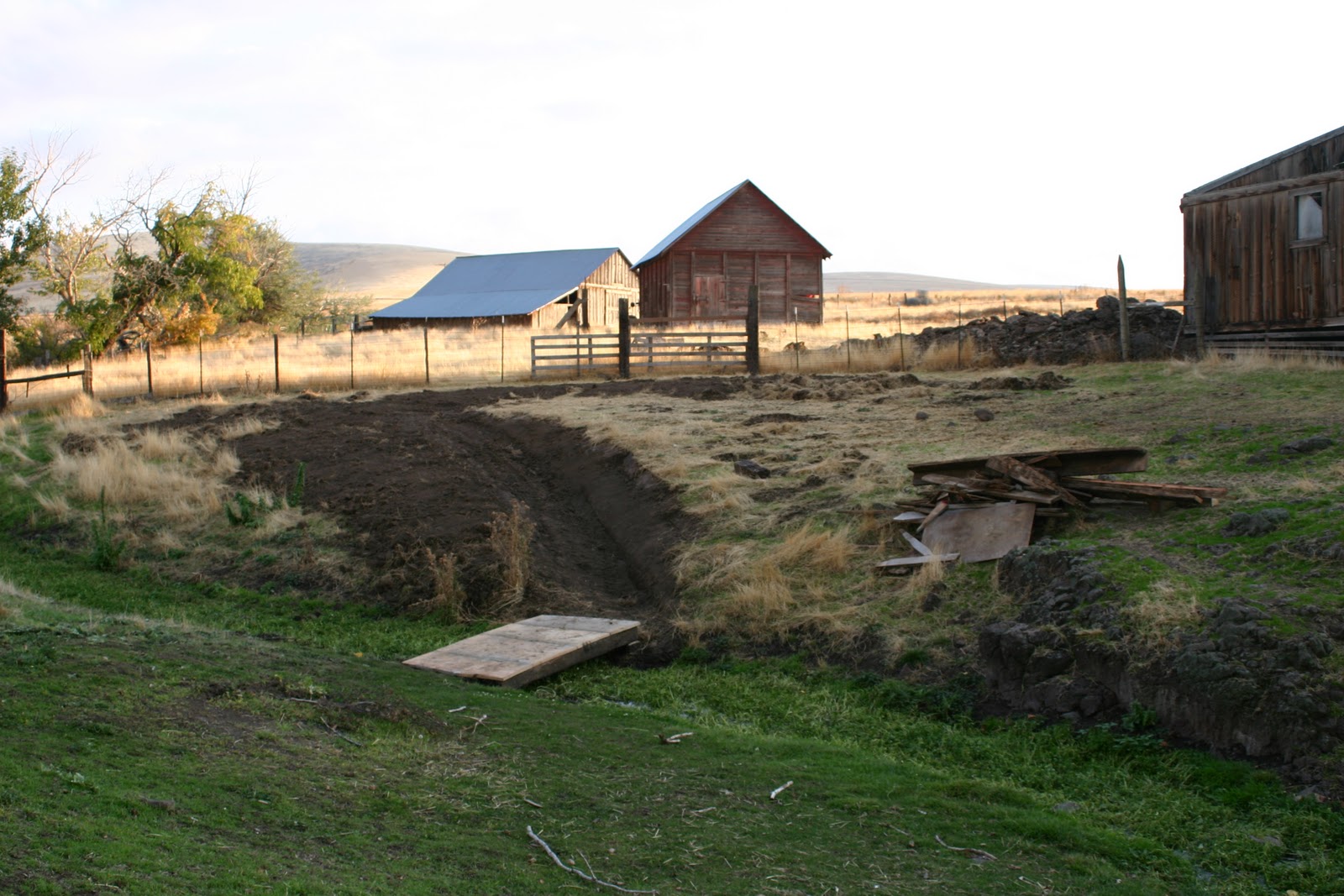
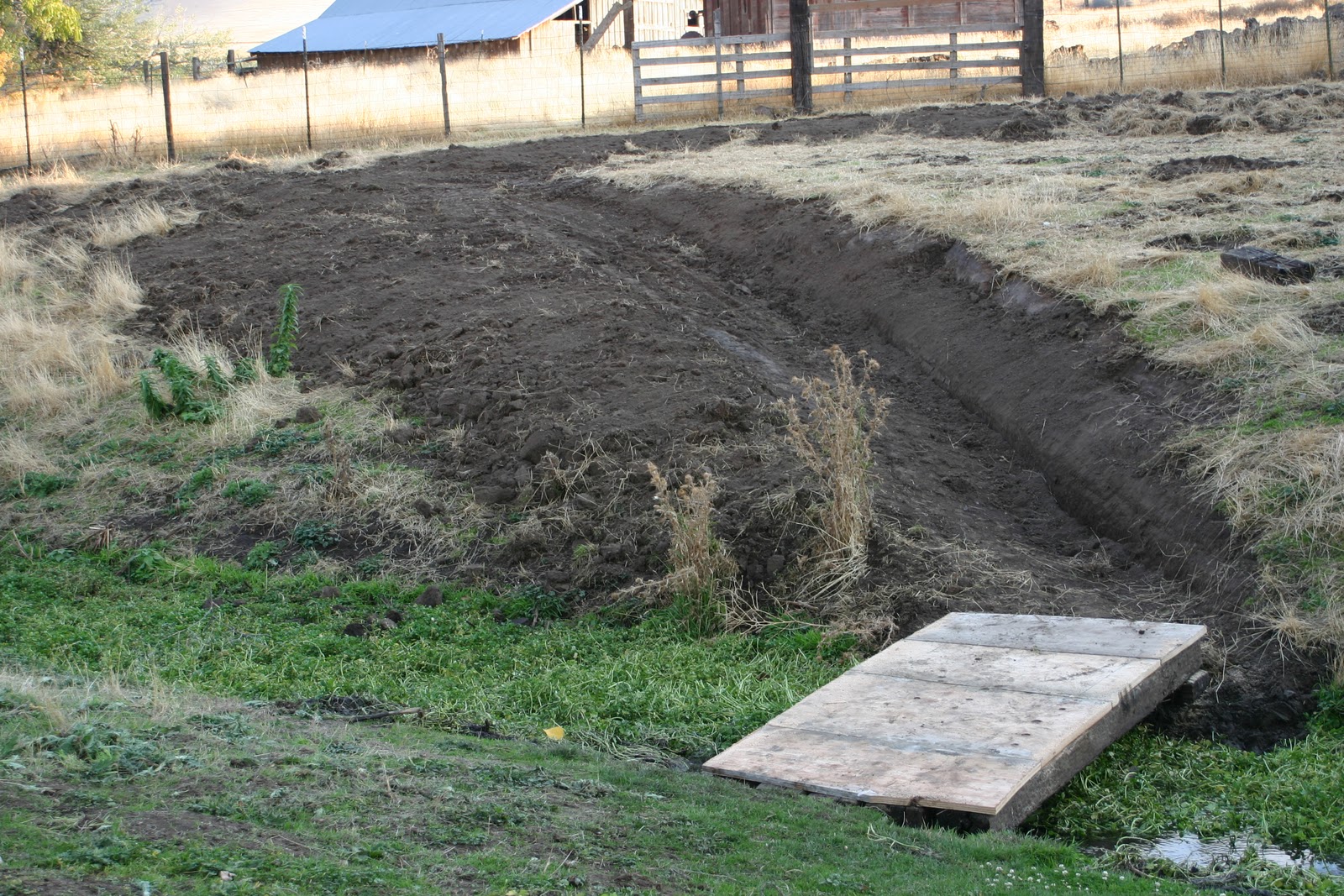
I was supposed to finish the horse enclosure today.  Sarah picked up all our outside water hoses and placed them in the wood shed.  Annmarie and I had talked last night about how to get the horses to cross the creek in the barn lot.  We came up with a culvert covered in dirt.  The front creek crosses through one out in the orchard (size to be measured as we could not agree either 2 or 3 foot diameter).  Great idea, but I don’t have any spare culvert and am still trying to pay for hay so this was not going to happen any time soon.  So, I decided to build one out of materials we already owned.  I threw down two cut pieces of railroad tie in the creek next to the bank and then dropped five railroad ties across the creek.  All of these were dragged behind the barn with the tractor.  Unfortunately, the tractor left them about 30 feet from where they needed to be.  I had to drag them in place by hand.  I saved the smallest one for last and it turned out to be the heaviest (just my luck).  After those were in place I used some old discarded one inch plywood (from my parents concrete stairway) across all five beams and screwed them all in place.  I then used the sawsall to cut the edges.  Very nice, very stout bridge.  Annmarie tried to get the horses to cross later, no go.  They stopped at the bridge edge and she was on the bridge tugging.  The horse wins every time in this contest. 

New bridge and path.  My soon to be burnt pile on the right.

I suggested Annmarie just throw some dirt over the bridge to fool horses.


 I then went up to the horse enclosure and started cutting out the last two beams.  I had to add some supports and then go at it with the sawsall.  The beam was huge I could not get through it.  I had to retry three times and then beat on it repeatedly.  No wonder, they were so clever a long time ago.  They had built in a drainage ditch in the back 1/3 of the milking barn so all waste could be shoveled into the ditch and sluiced out daily to keep the milk barn clean.  I had no idea this was here. 

Old wooden sluice in milk barn, below floor level.

I threw the beams over the wire and into the sheep area.  I want to store them in the barn for future use.  All but one were reusable.   It took me almost two hours to dig out the area with the tractor.  About half way into it I realized that the roll bar on the tractor was bumping into the door opening and had to be lowered.  I thought there was just a little dirt to be moved.  Not at all.  I moved almost three feet deep dirt across the whole area.  it was good practice for the tractor.  I did have to used four wheel drive, as the area was pretty wet from the rain last night.  I just dumped all the dirt and crap over the hillside in a low spot.  I did end up having to do about an hour of hand digging near the edges.  I just could not maneuver the tractor in to all areas.  I would have needed a backhoe.  I don’t have a backhoe.  So I got to dig for an hour by hand.  I did remember to park the tractor under cover.  I have less than 8 hours of run time on the tractor so far. 

I need about another hour with a shovel.  Hence the wheelbarrow…

Dirt and sheep dung from the horse enclosure.  It needs to be raked by hand.

Rush to finish before Winter.

Saturday was supposed to be the big day to get the hay.  I had a few other things planned but this was the #1 goal.  As in all things that I do the first time, this went about as smoothly as normal.  Annmarie gave me a ride down to the truck (parked at the residence of the guy supplying us with hay).  I remembered to take the rope (I had just purchased it for this reason) so I could tie the hay down.  First problem, there are no hooks on the outside of the truck with which to tie a rope.  I ended up crawling underneath the truck and finding a gap on the cross beams that I could fish the rope through.  Plenty strong enough but very hard to pull real tight.  I definitely need to talk to someone about getting some hooks welded to the bed.  I am pretty sure the other truck (broken) has hooks welded around it.  I got it all tied down and went to start it.

I had just turned the key and the truck was trying to start when I noticed that the overdrive button was in high.  I mashed it down real quick and killed the engine.  Every time I tried to start it a small red light that said “override” came on and the truck would not even turn over.  I then read the directions near the floorboard on shifting into low.  I am supposed to do it with the truck moving after I have shifted the transmission.  Not first.  So I started walking home.  It is about a 2 mile hike.  Halfway home the hay guy shows up and agrees to give me a tow to see if we can get the truck going.  It didn’t start.  So now I need to get the pickup battery replaced so I can drive the pickup over to the truck, check the fuses, and attempt to jump start the truck.  This is Monday’s priority task.

He did give me a ride back to the house, but had to leave and go do some other things.  I decided that the priority for the day was to pick up all the old aluminum sprinkler pipe.  I would need to use the tractor to do this, but I still had the box scraper on the tractor and I had promised Annmarie a new path in the barn in an attempt to make the creek crossing easier for the horses.  So I made the path first.  It was pretty cool to just drag dirt and make a gradual path.  It only took me about an hour to make the whole thing.  Then I went off to get sprinkler pipe.

The pipe was on a large handmade trailer at the far end of the property near the road.  My mother-in-law had already had two people come to the house and offer to buy the pipe.  We were concerned that the pipe might just disappear in the night some time soon.  I went down and hooked on to the trailer after straightening out the load.  Couldn’t go anywhere, used positrack, no where, had to put it in four wheel drive to get the trailer started and to pull it back around next to the grain bins.  It is a slow process, on the way I found another pipe sticking up near an irrigation ditch.  So I stopped and tried to pull it out by hand.  About half way down its length (40 feet) it gets buried about one foot under ground.  I did not have a shovel with me so it will have to wait until later.  I pulled up alongside the fence and sorted it into four piles.  The first pile is pipe that needs repaired but I can do myself (needs a new sprinkler riser or sprinkler), second pile is useable pipe (bent included), third pile is totally trashed and good for parts and scrap or could be welded back together (needs repair by professional) and the fourth pile is pipe that was used as mainline and has the sprinkler hole plugged with a cap (this pile had the straightest pipe).  Now that the trailer was empty I drug it out onto the road and back into the CRP field so I could get the pipe stacked up against the fence.  I ended up dragging the pipe out of the weeds and hanging one end on the fence so I could snag it from the other side later.

There are a few secrets to moving pipe.  Find the center of balance quickly it makes moving the pipe easier.  Pipe full of mud weighs a lot, a whole lot.  When pulling on pipe violently upwards to remove it from the grass and blackberry bush make sure you are not straddling the end with the sprinkler riser or else you may gag and hit the ground.  I reiterate, do not do this it is bad.  When fishing broken pipe out of the irrigation ditch make sure pipe is not full of yellow jackets.  They really don’t like being disturbed.  When pulling on pipe that is kinda stacked together make sure that jerking on said pipe doesn’t cause its neighbor to jam you in the ribs (large abrasion/bruise).   I ended up filling the whole trailer again and parking it behind the machine shop.  It needs to be unloaded before I can grab another 12-15 pieces behind the machine shop.  I stopped because it was dinner time and because I could no longer lift my arms above my head.  Anyone that pays for P90X can come to the farm and do work for free.  I guarantee you would be fit in 90 days! (after working 4-6 hours a day for 90 days).

Sauerkraut

On Friday we went to Sarah’s Great Grandmother’s house to make Sauerkraut.  I wanted to do it in a five gallon bucket but Ruby (grandmother) wanted to use crocks.  She had made it in the past and they always used crocks.  We forgot to measure the crocks but they are 1 or 2 gallon (much discussion/arguing about size).  When we can the sauerkraut the size issue will be resolved.  A lot of cabbage goes a short way.  We managed to get 14 pounds of sliced cabbage into the two 1 gallon ( my size choice) crocks.  We used our cabbage slicer that was purchased at an auction this summer.  Ruby used her recipe from a canning book written in 1943, I went onto you tube and watched about 40 minutes to video from various people.

You slice the cabbage very thin and then add 3 Tbsp of salt to every 5# of cabbage.  Mix the salt and cabbage together by hand and then pound the cabbage until it waters up and the water is at the top of the cabbage.  Then do it again until the crock/bucket is a few inches from the top.  Wipe off the top rim and sides, add a layer of whole cabbage leaves to the top and spread an unopened trash bag over the top.  Tuck the bag in and down along all the sides so it is sitting on top of the cabbage.  Take another water tight bag and fill it up with water while the bag is sitting on top of the cabbage.  This water bag acts like a weight and a seal.  Now wait 10 days to six months depending on who you listen to.  We are going to check it at 14 days.  We used up most of the cabbage from the garden doing this.  A five gallon bucket would take around 50# of cabbage (if I am right other wise it will only take 35#).