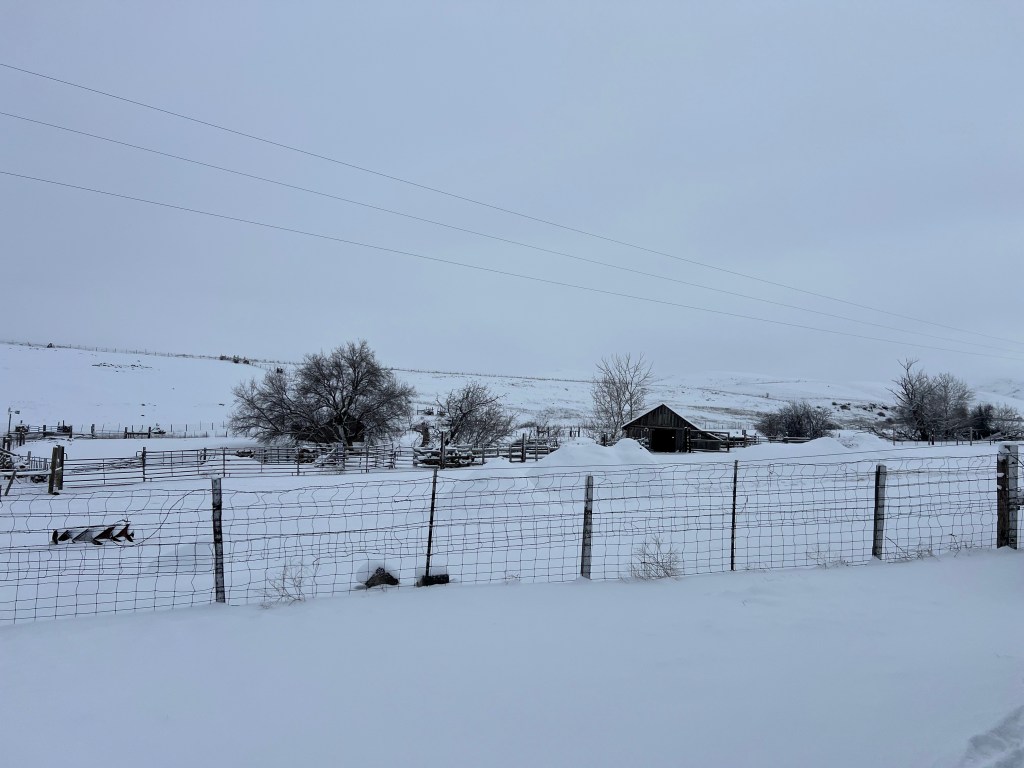
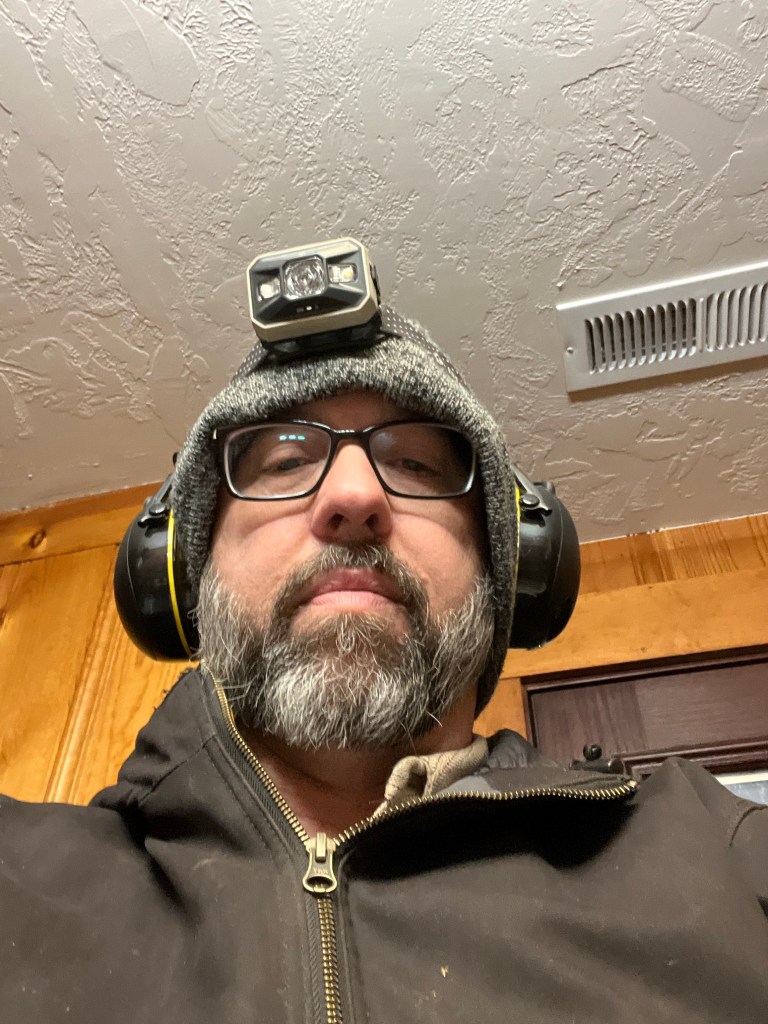
Well it is officially winter and to top off the snow we have had subzero (F) weather. That does mean that to go to the barn now requires insulated coveralls, boots, knit cap, neck warmer, heavy coat and insulated gloves before going outside. This is doable as we keep all of that out in the laundry room for just this occasion but I forget how brisk the weather can be until my runny nose/breathe causes ice to form in my mustache and beard. It adds a whole new dimension to getting “thawed out” once you are inside the warm house. I had great plans for working on the mud room walls despite the cold. No way, once the cold hit I realized that I did not want to be outside working on a stem wall.
There is always one thing I forget (well maybe more) but it does come back to bite me. I did not add diesel fuel oil treatment to the diesel storage tank this fall. I have not needed it even when the temperature got down to 10F. The tractors have always started. The tractors will not start at below 0F. I had to go to town on Saturday and buy treatment for the storage tank and special “hot shot” treatment for a diesel that is already gelled up. You remove the fuel filter and fill hallway with this stuff and pour a bunch in the fuel tank. I then tented the Kubota in a canvas tarp and put a oil heater under the tractor to try and heat up the entire engine. I also had to purchase a Lithium external jumpstart battery as the cold has really stressed the tractor battery. Not enough cranking power for any extended starting effort. I left all of that overnight and today tried to start the tractor. I got it turned over and going no problem. I had it on low idle as every time I tried to give it a lot of power the engine started to sputter out. My plan was to just let it run and heat up on low idle. Nope, that did not work. The tractor kept shutting down until finally I could not start it again.
So instead I backed the pickup up to a large alfalfa bale in the machine shed that had popped open and hand forked about 1/4 into the back of the pickup. I had dropped off two large bales just before the storm came. I was planning ahead. I should have planned better and put out three large bales! I may have to feed the cows every day by hand until the weather warms up enough to let me fire up the tractor. Not exactly ideal but another lesson learned. Now hopefully I can remember it. I think I will just keep treating all of the fuel that goes through the large storage tank so this is not an issue. I only used about 300 gallons last year. This is just too painful to want to repeat on a regular basis.
My external chicken yard auto door is frozen shut. Luckily, the chickens hate the snow and only come out far enough to eat the snow. They will not get down and run around in the snow. So its not a big deal currently, we will see what happens when the weather warms up. I sure hope the door works after that as it is brand new.
The back porch cats have been moved but we put their food on a ledge next to the root cellar entrance and built a roof to keep the rain off the food. The food is not getting wet but it is getting covered in snow. I am going to have to make a food box enclosed on all sides but the front so the food dish can stay dry. This will have to be added to the project list.
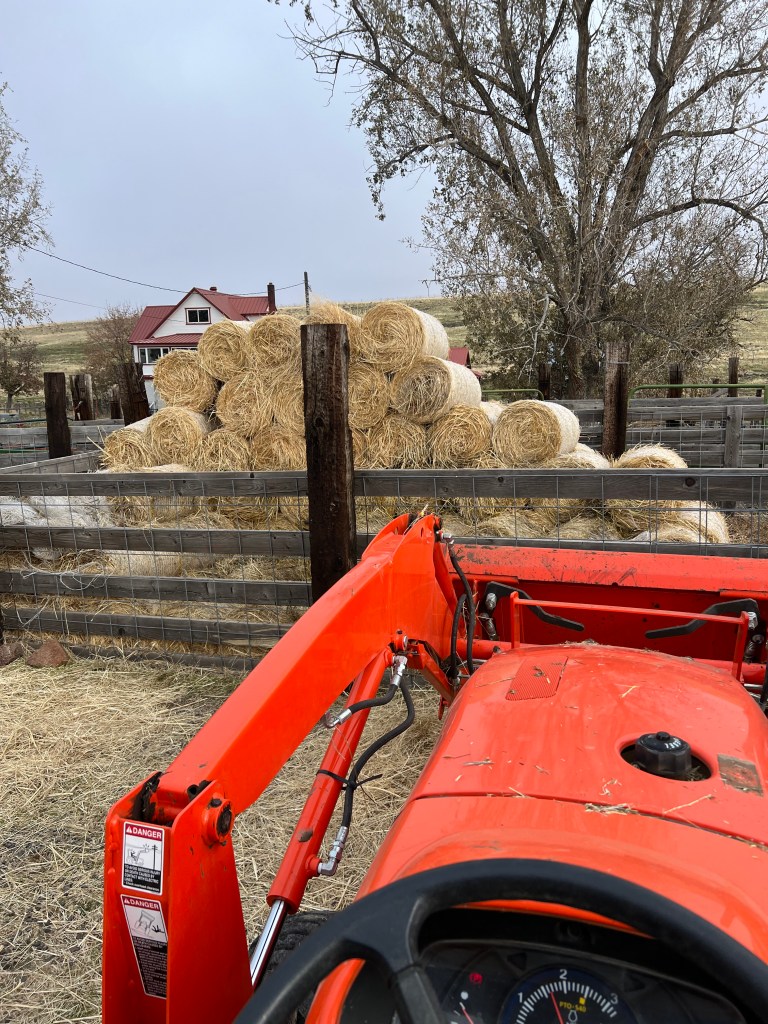
Well Winter is definitely coming, we had our first freeze this fall. It dropped down into the low 20’s F and there is snow visible on the mountains and low foothills. We got rain instead of snow but Winter is coming. This spurred the decision to finally go and pickup the big bales of alfalfa that I had purchased this spring. My supplier holds them for me as I almost always pick them up late! I am a reliable customer so it works for both of us. I had been selling off the old small round bales from the machine shed and I managed to get the last of them unloaded and sold the day I went and picked up the large bales. I could store most of the years alfalfa in the machine shed if I had a tractor that could lift 1400# bales 14 feet into the air. But since I do not, I put 15 bales in the machine shed and they are the very last bales that I feed in the late winter/early spring. The rest go out onto the hillside in field 4b. The animals all get locked out of that field and I usually buy a big tarp and toss a lot of pallets on it to hold it in place. After buying the vinyl sign to use as a tarp and seeing how thick it is I bought two 12’x40’ signs/tarps and will lay those across the top of the large bales. I think they may even survive the winter. They should be here by the end of the week. Mr Rainman/me bent the loader support on the Kubota. It is for removing the loader and helping it be freestanding. The pull pin got displaced and the arm popped down while a big bale was getting jostled in place and it bent. The main pin had to be cut in three places to get it to let go! A 2# hammer and punch could not drive it out. The pin has spring clips so it will have to be a special order item. We were able to keep moving hay and that was the important part.
One of the things observed when we got the machine shed cleaned out was that there is a pretty damp back corner of the hay storage side. I had put down pallets last time and that worked really well to keep the hay from rotting. Years ago I had dug a trench on the backside of the machine shed and filled it with gravel to increase the drainage removal from the roof runoff. This did help quite a bit but it looks like it needs more help. Next year the gravel needs to be dug out and some French drain hose installed and then replace the gravel. I will also run the end of the drain farther away from the building. This should help quite a bit. The front ditch works wonders but I made a big sink hole for all of the water to go into and I did not do that with the back section.
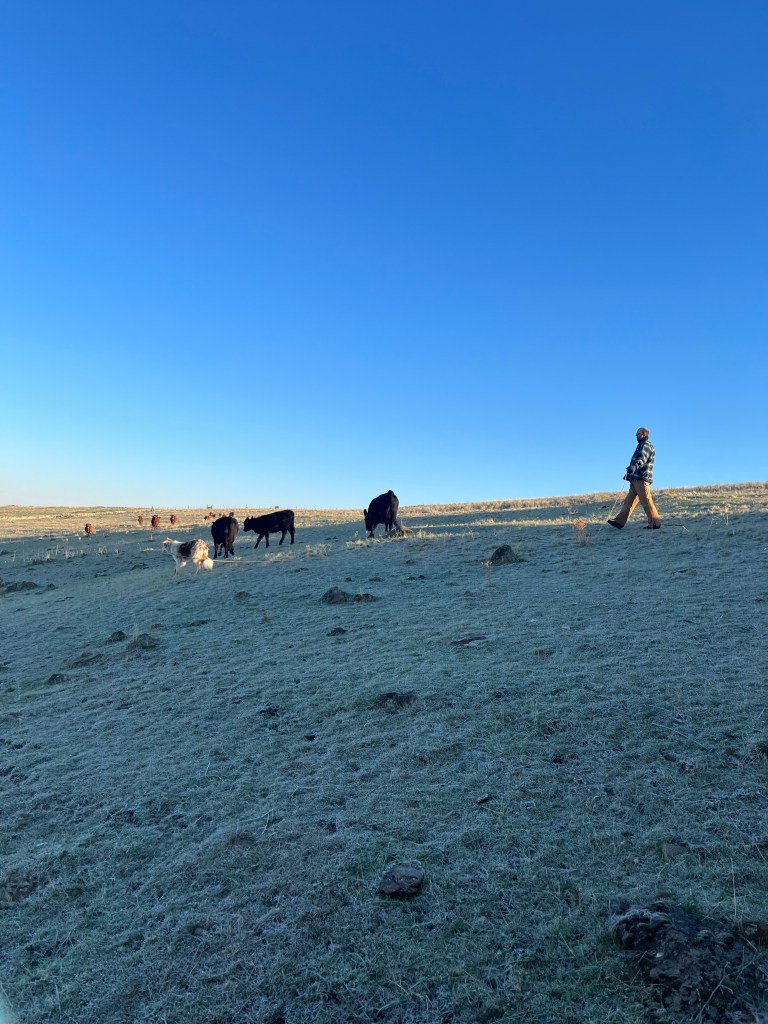
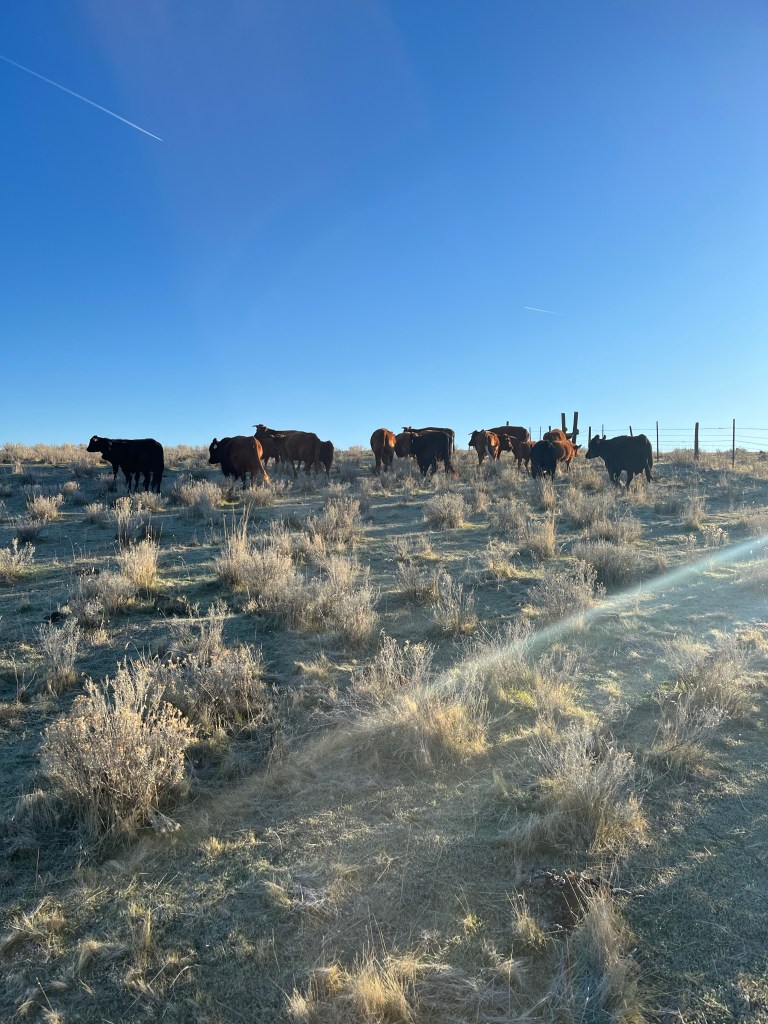
Sunday we went out first thing to sort the cows. It was cold again so I put on a long sleeve shirt, knit hat, knit neck warmer, insulated carharts, large bulky quilted long sleeve over shirt and insulated gloves. I had a heavy vest ready to go but decided that I was dressing for -20F instead of 22F. I put the puppy, Chance, on a lead rope and we opened up gates to get the cows to the corral so that the bull could be sorted off. Once the bull is in Alcatraz we can put all of the cows into one herd. We can run one herd of cows until January when this years calves need to be weaned off. We will sort off the market cows and the calves and put those 11 cows down by the houses and keep the other above the house, there will be three fences and 100 yards minimum between the two herds. In reality there are a bunch of buildings and earthworks that prevent a line of sight from happening. They can still talk to each other and will especially right after we separate them. It is about 3-5 days of lots of hollering and voiced displeasure from both parties.
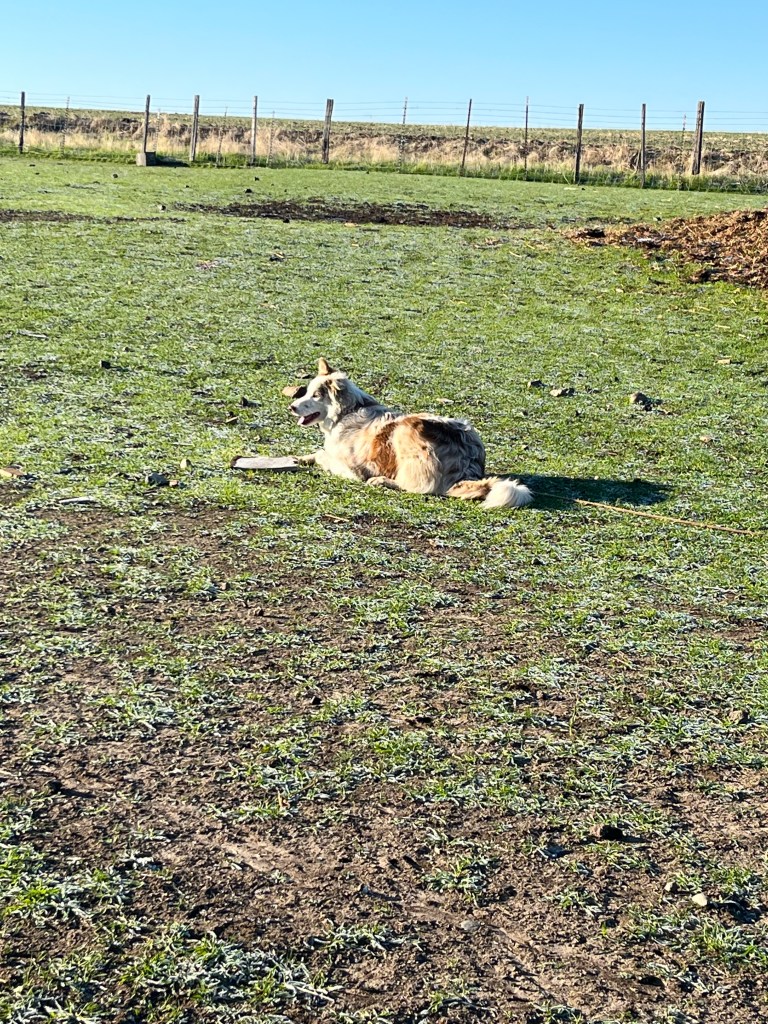
Chance did great once she got settled down. She wanted to sniff the hillside and find coyotes. She does not like other dogs as they are interlopers on her property. She does fine with our other border collie but not any other dog. We have not discouraged this as our coyote problem is immense and we want her to alert us if she spots one. Mr Rainman and I merely walked to the schoolhouse, had to run halfway up the hill once and then casually walk the cows to the hen house pasture. Once there we were able to separate the bull from the rest of the herd, opened the back door to Alcatraz and he went in as directed. We did not even have to use the corral to sort! I took Chance into the front barn lot and we worked the cows in an enclosed space. I let her run around with the lead rope trailing (there is nothing for the rope to catch on) and giving her commands to move the cows. She did great! I can now get her to lay down while she is mid chase on one of the cows. She will stop and drop to the ground. We need more work on her directions, left, right and circle around. The true key though is to be able to turn off the dog no matter what the circumstances, once you can do that training the other commands is easy. Once we let the cows out there were about 18 sheep that had come in still in the area, so I had Mr Rainman call Chance and work the sheep. We want her to respond to multiple people. A one person dog is great when you are the only one working the dog but having one that will listen to other people is handy. She is a true people pleaser so this fits right in with her personality.
I had shed the gloves, hat and neck warmer by the time we got off the hillside and by the time we got to the hen house I had taken off the outer jacket and was just wearing my Carharts and a light long sleeve shirt! I should have known, the rule is to leave the house with enough clothes that you are just a little uncomfortable and want more to stay warm. Work and exercise will give you the needed heat to stay warm and you won’t sweat.
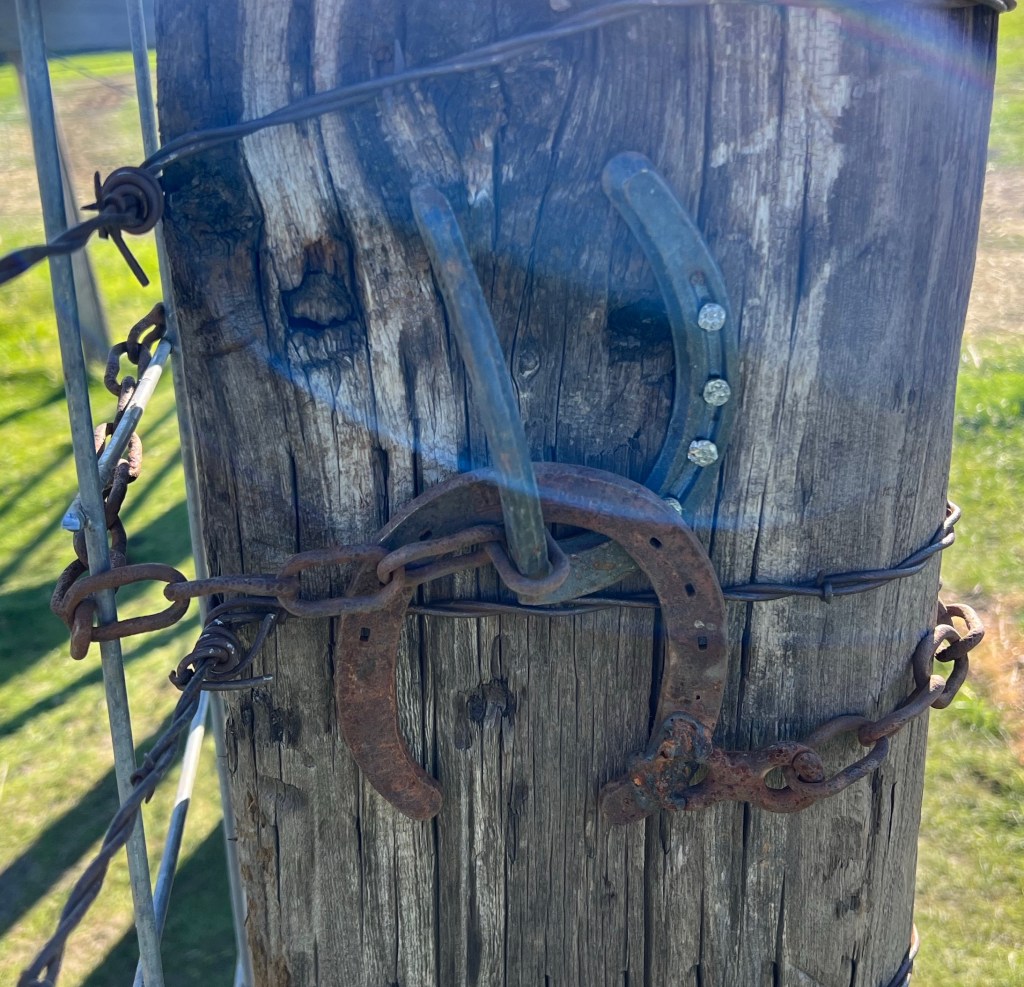
We put in another gate into the alleyway from the hen house pasture. This way the animals can always get to water. The main spring on the farm originates in that pasture. We have had the gate leaning up against the fence since last year when we finished the alleyway. Now the cows will always be able to get to water. I even chained the gate open so it cannot accidentally get closed. There is one more gate still to be installed there and one small section of fence to install so that the cows can get to most of field four but not the area where we store the cow hay.
Some things continue to amaze me. We had a volunteer pumpkin grow at the main burn pile. The alpaca did not eat the plant, flower or pumpkin but the most amazing part was the plant got zero water. This summer we went over two months with no rain at one point. Annmarie made pumpkin purée and froze it today. We will be eating the rest for dinner tonight. I am going to plant several seeds around the pile in the spring! Who knows maybe this is the trick to growing pumpkins. The quail are everywhere, we have very large coveys all over the farm and we have started to keep a quail feed block out front by the old farm equipment pile. We hear quail all of the time now whenever we are outside. Heck, we even have a new pair of barn owls on the place. They have decided to roost in the large trees out front just before sunrise. They talk back and forth and are quite noisy. The coyote hunters have tried two more times without any success. They did see more coyotes but could not safely shoot them. Pretty quick we will be locking the sheep up at night and only letting them go out into the ram pasture as they will have lambs.
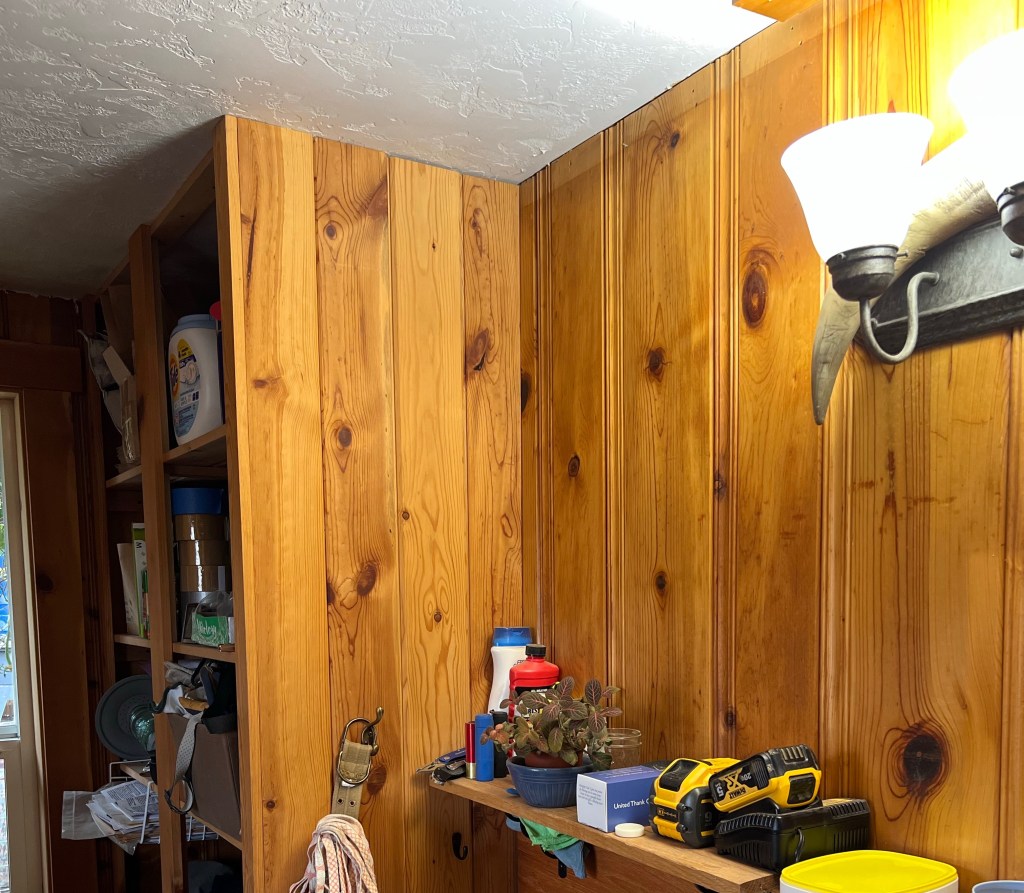
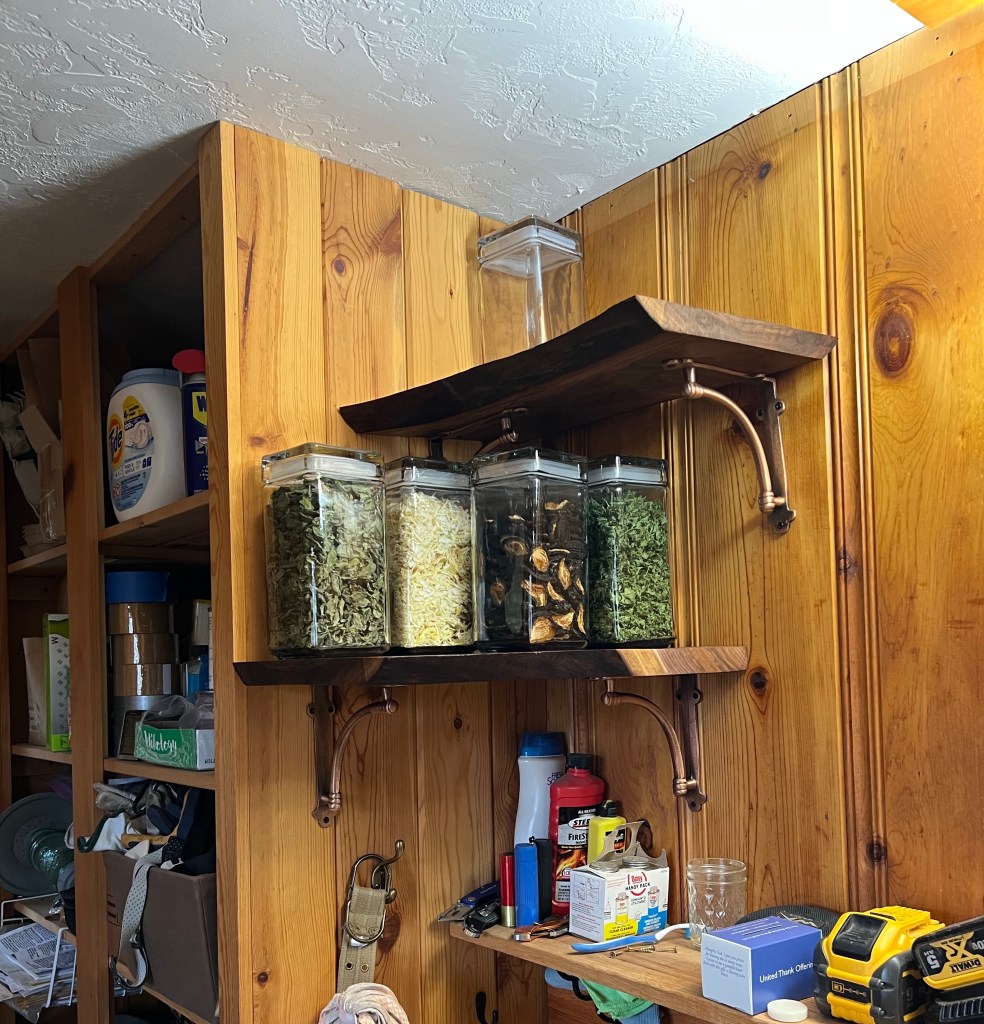
Sunday I was going to go out to the barn and finish the three strings of lights that have wire ran to them. I still need to wait for the fourth roll of wire I had to order to arrive. I am not sure why I thought three rolls would be sufficient. I used the pending arrival of said wire roll as the reason to not go to the barn and instead decided to work on the new shelves in the laundry room. Our counters are getting crowded with all of the containers of dried herbs, vegetables and plums so I figured it was time to get on the shelves. The supports had come in a couple of weeks ago and The Apprentice and I had brought down the wood so it was just a matter of sanding it down and cutting it to shape.
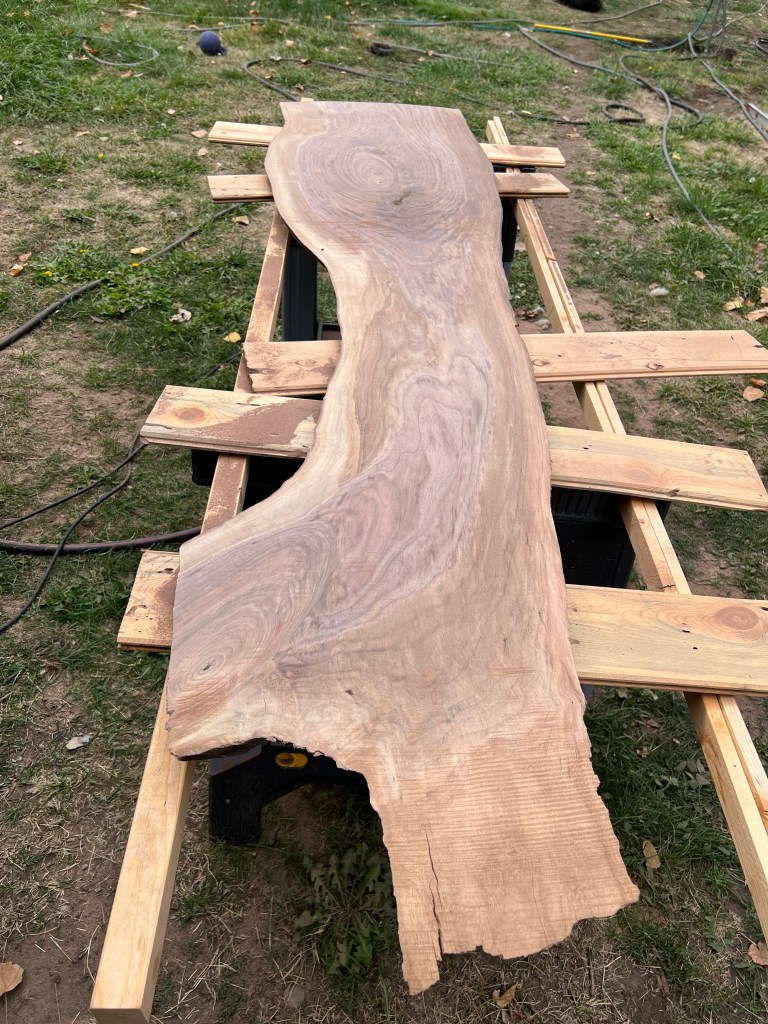
Yeah, all I had to do was sand down a black walnut slab that was only one inch thick and had been drying for four years. Needless to say it was not flat. Even with 40 grit sandpaper and an 18” belt sander it still took me almost four hours to sand down those two shelves! I really needed a hand planer. I have never really used one before but this is the perfect use for one. I may have to learn how to use it as there are a whole bunch of black walnut boards out in the old chicken coop.
I sanded both sides with belt sander and after I got to 80 grit with the belt sander I switched to an orbital sander and started with 50 grit again. Of course about three hours into the sanding it started to rain and I had to move everything into the old house and wear an N95 for the After four hours I figured it was just time to cut the board and go with what I had. I cut the shelves, added the supports and then mounted them on the walls. I, of course, had to make two trips out to the old house to get screws that did not come with the supports.
All in all it turned out pretty good and the wife was happy. We now have a space to store the bounty of our garden harvest. I still have to wire the barn but I can do that in the rain.
Last weekend I was very productive! I am still in winterizing mode and there is still plenty left to do. On Friday last week, I cleaned out the machine shed to make room for both tractors. I need to be able to park them out of the weather. Annmarie, let me know we needed to get the lavender trimmed up, another winterizing chore. I broke out the new DeWalt battery hedge trimmer and started in on the task. This turned out to be a little more difficult than I imagined. The lavender had shoots super low and I had to lift them up to cut them and the huge tree keeps dropping small branches into the lavender making it necessary to clean out the lavender bunch before trimming. I only got half the patch done before it got super cold and for sanity reasons I needed to go back into the house.
On Saturday it was cold, very cold. I put on neck warmer, wool shirt, carhart insulated bibs stocking cap and thick insulated gloves. I wanted something warm to drink, my go to drink is coffee. Coffee is the perfect drink and solves most of what ills a person. I was in a hurry and ended up just boiling some water and throwing a tea bag into the thermos. I wanted to get out and finish the ditch up in field #1. I keep trying to get it finished before we get a hard freeze. I was able to get another 200 feet dug up, reinforced. I found a 20 foot section of the embankment that had been washed out in the last flood. It took quite a while to get this section built back up. It was cold, so I broke out the hot tea. Yeah, it’s tea, simply not a substitute for coffee. I only tried it a couple more times out of thermoregulatory needs, it was cold! The oddest and best part of the day was that my coat smelled amazing. The lavender I had cleaned up and removed from the patch ended up rubbing some lavender oil on my coat and when the wind let off or I had to wipe my nose I could smell the lavender. It made for a nice surprise.
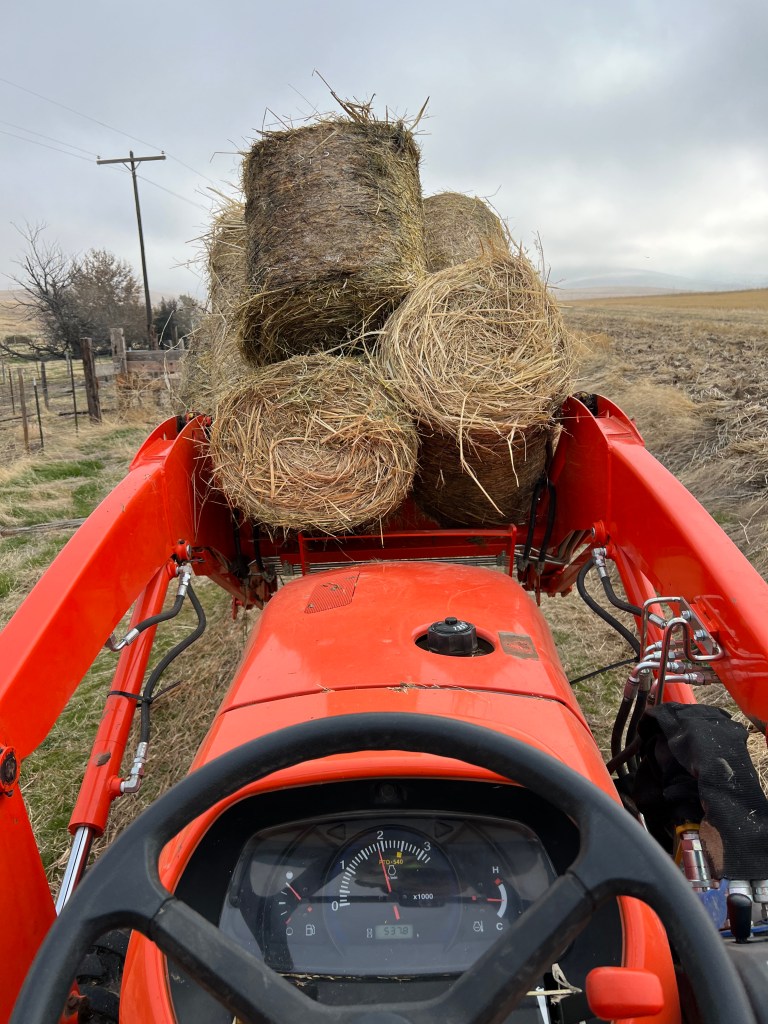
Sunday I decided to start feeding the cows out of our overflow hay in the corral. Each bale weighs around 40# and I fed 16 bales to the upper cows and 16 to the lower cows. I can get 8 on the tractor at a time. I have learned to cut off the net wrapping before I load them onto the tractor so I can just drive them out and dump them off. Its way faster this way and I can contain the wrap. This year I have started putting a bag of used wrap in the trash can weekly. I don’t want to have a huge pile by the spring. I went back to the lavender patch and got it all trimmed up. I pulled weeds and raked the entire patch. The only thing left in the garden to do is to trim the raspberries. I pulled out the prime rib from the freezer. We are going to have it for Thanksgiving
Well Winter is almost officially here. It did snow this week at our house but it did not stick. The mountains have been covered in snow for a week. I keep trying to get things done around the place but the paying job is in overdrive and I have been working a lot making it hard to find time. So I have been doing one item at a time when I have a spare minute. This does tend to drag things out.
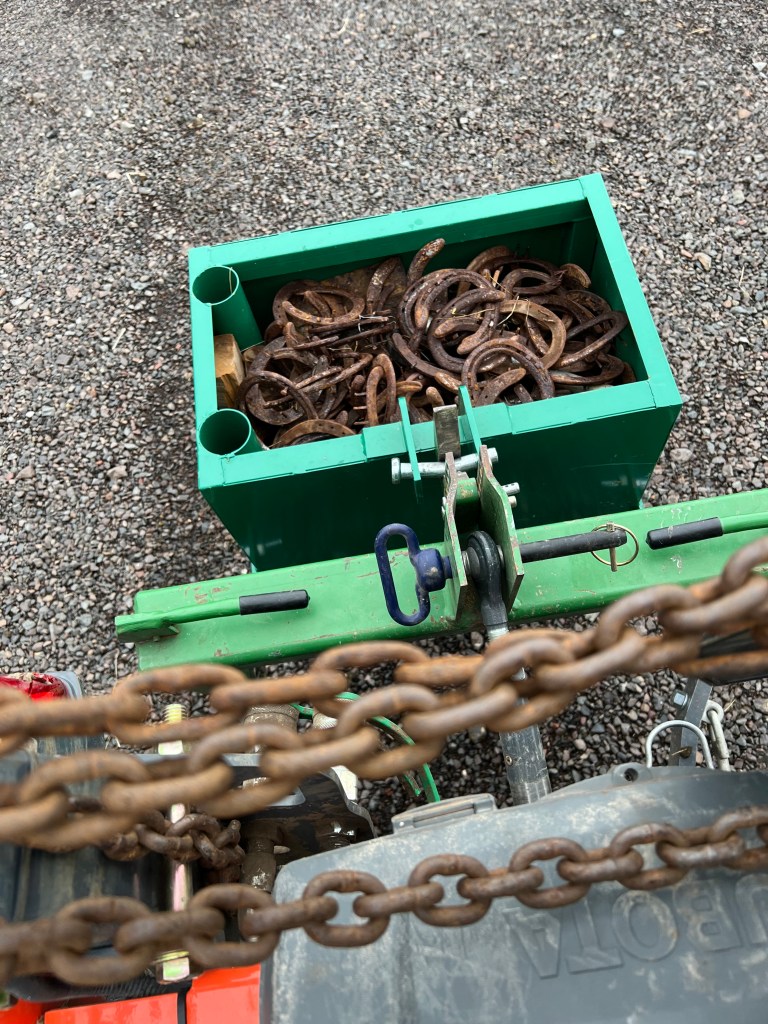
We had one of the alpaca die, an old white one. He went to the eternal resting place of all farm animals, the boneyard. Half of them are ancient and half are under age 7 now. We are not sure how their food intake is with all of the land they have access to being dried up. I have been giving them round bales but they are also very dry and the rejects. The alpaca have been eating them but we are worried about their caloric intake. So I went out and got a big bale of alfalfa for them. We have done this in past years but one 1300 pound bale is more hay than 11 (now) alpaca can eat in an entire winter. This makes the bottom of the bale mold as it sits on the ground, gets rained on and lasts all winter long. So this year I managed to get the bale up onto two pallets so it is off the ground. This should make it last all winter, so we are able to feed 11 alpaca for $182 all winter long. Honestly, they are fairly cheap to keep. If we had to pay to have them sheared/feet/teeth trimmed it would be about $70/each. After this year that is not looking too bad! I managed to get the weight box placed on the Kubota and filled up with horseshoes. This is much better than the 50 gallon barrel we used last year. Using this on the Kubota I was able to lift the bale about two inches off the ground and I did not have to try and steer the bale to where I wanted it with only the two front tires touching the ground! I still cannot move the bale in two wheel drive, I have to use four wheel drive on the tractor to get enough traction when there is any moisture on the ground. I will leave the counterweight bucket on all winter, I am hopeful that when I put the snow blade on this will help me immensely. I simply do not want to battle putting on chains in the snow.
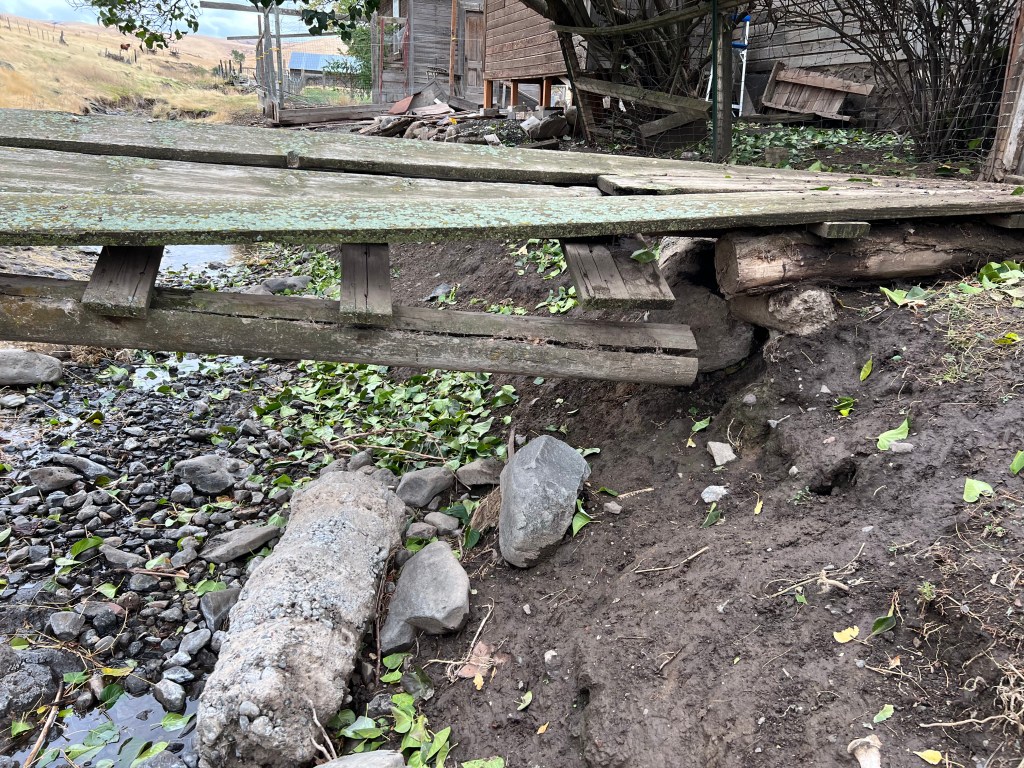
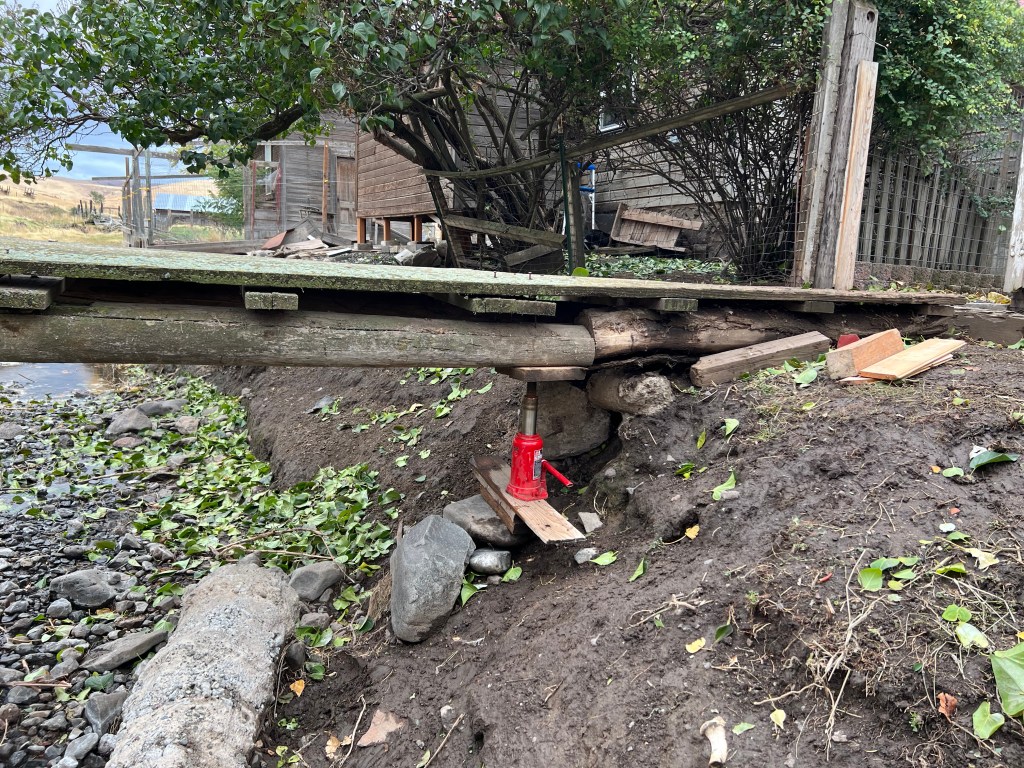
I managed to get the mower and weed eater moved over into the wood shed since the bridge is functional. I had already drained and rolled up all of our hoses (11) and drained the front sprinklers and blew out the drip lines in the lavender. I just need to get the hoses into the wood shed and I can cut down the bridge. There are two logs that act as horizontal supports. I will have to build new concrete bases in the spring but I am hopeful that I can use the logs again as the horizontal supports. I will just cut off the ends that have softened. I may be able to get another 15 years out of them. They were here when we moved here and I was able to reuse them when I repaired the bridge the first time. I may also raise the bridge about 12 inches. This should stop it from getting washed away in the floods. If it gets washed away after that then Annmarie will design an ached truss bridge and I will spend a couple of months building it. It won’t be a fast project.
We want to move the honeybees to this side of the back creek. The bridge did not fair very well after the flooding last year and half of it has collapsed. It will not survive another spring runoff. In an attempt to save it, I want to cut it down but then we will have no access to the back shed for a few months. This is unacceptable as we will not be able to check up on the bees and we have been feeding them already so they do not use up all of their honey this winter. We would like them to start the spring with a bunch in the hive so we can steal a lot this next fall. This means the bees need to be moved, without killing the queen and without taking the hive apart as it is now too cold to move the individual boxes. I was able to strap the hive together with a tie down but the bridge needed to temporarily fixed to allow for the transfer. I managed to jack the bridge up using two bottle jacks and this morning Annmarie and I went out to move the hive. It is very heavy and it was decided that just walking and carrying it was not an option. We strapped it to a hand cart and worked it over into the lavender patch. The only problem it will have now is if a huge branch falls down and crushes it. We don’t see that as highly likely but it is possible. We wanted it in the corner to provide some shelter from the wind and weather.
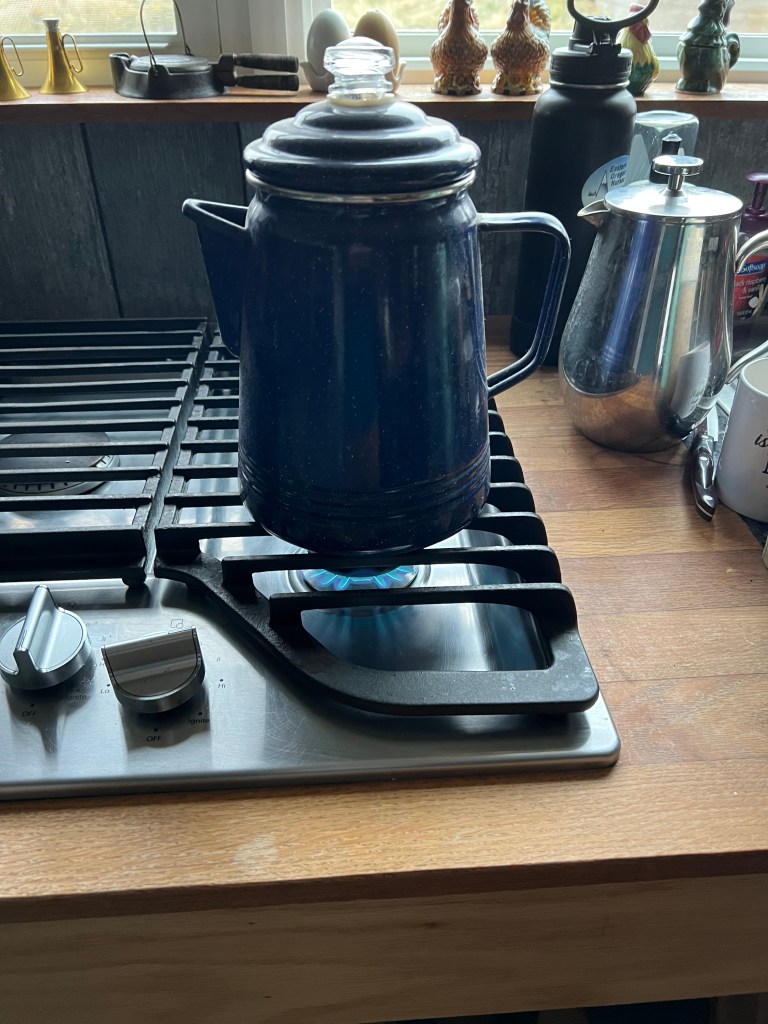
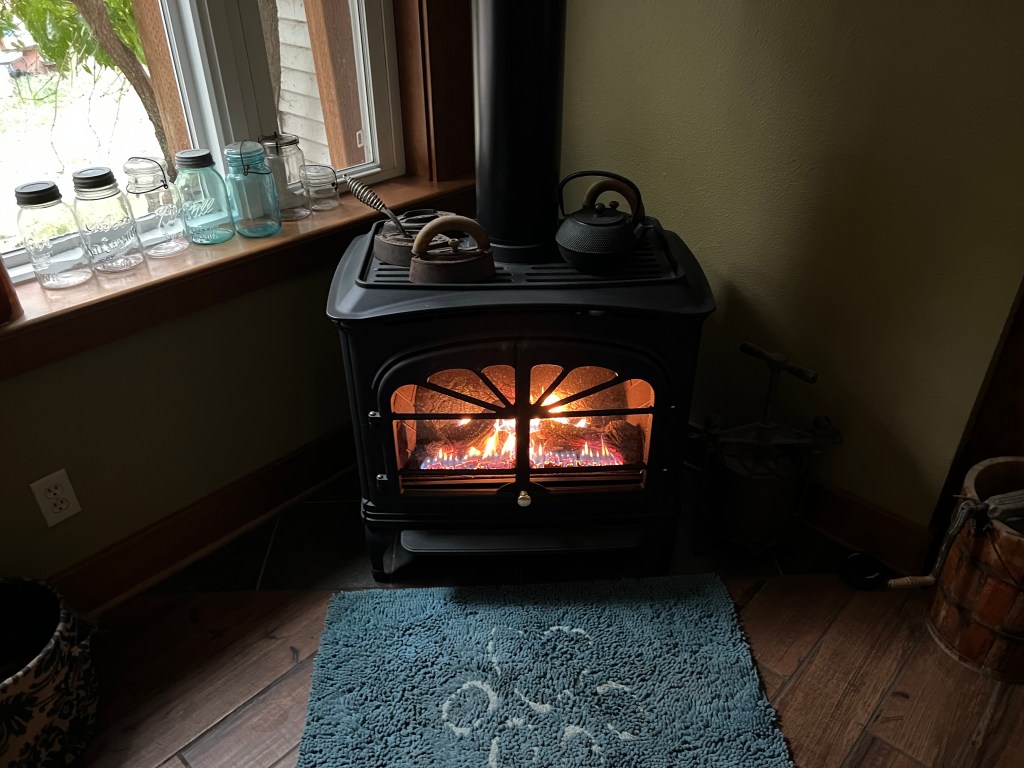
The weather is all screwy again. I am pretty sure that is going to be our new normal. We had 1.35” of rain in a 24 hour period. We set a new record for rainfall in a single day in November. So far we have gotten 1.59” of rain in November and its only the fifth and it did not rain yesterday. We did have a windstorm last night that peaked up to almost 80 mph winds. This of course caused us to lose power last night as all the power lines are above ground and susceptible to tree limbs or poles falling. They had the power up and going by around 1000. Luckily for us we have a propane stovetop and propane stove. We just lit both of them manually and had heat and coffee. Coffee before breakfast, always. There is a reason we keep an old coffee stovetop percolator. We have figured out we are going to have to keep a few gallons of water on hand. I used to keep plastic jugs but found that they will leak over years so we are going to reuse the gallon glass jugs I used to use to make mead. They will not leak and now that we use the old safe I can get rid of the new safe and we will have room for four gallons of water. We did figure one thing out though, we have an old fashioned land line as those used to work 24/7 without power. When our area lost power the land line went dead also. We will now be cancelling our backup as it no longer works without power. Our cell phone service is spotty but its what we have. I will need to get a solar charger for our electronics. We should probably look into solar panels so we have some type of power if the grid goes down but I am unsure about a battery bank and think the technology might be way better in five years. Our puppy did not like the wind storm, every time she went outside she barked at the wind for about 30 seconds before going outside to potty.










 Stewart Creek Somethings