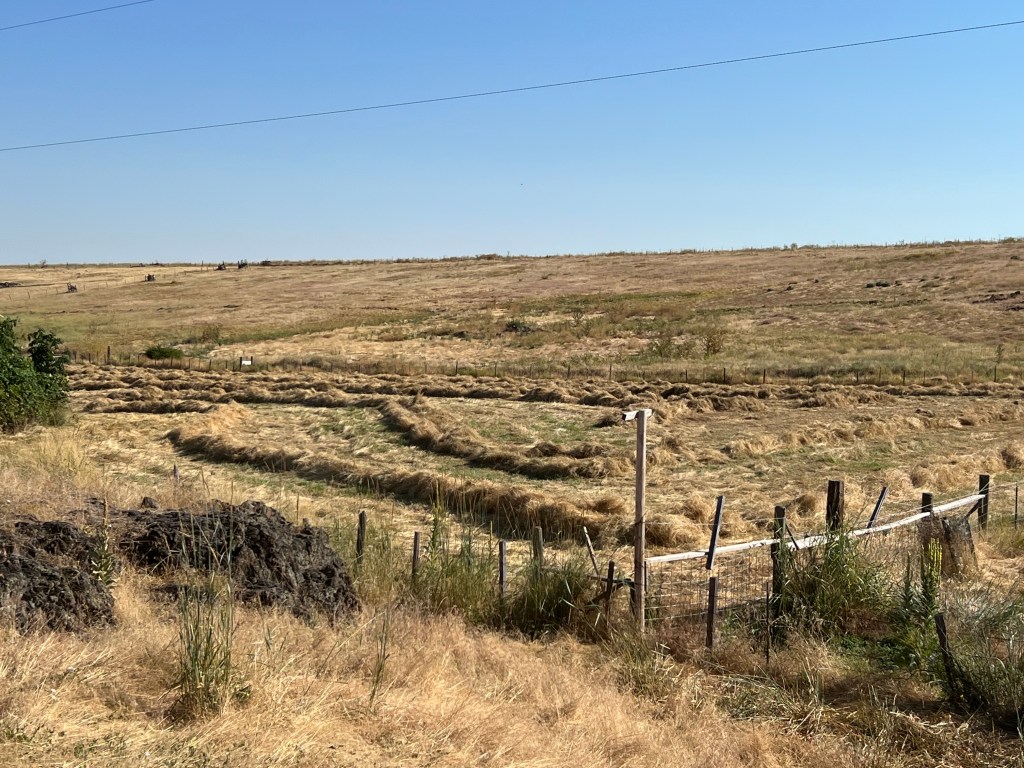
Well we have had a heat wave with the temperatures running 102-111 F this two weeks ago so I have not been doing much work outside. This last weekend I decided to get up early and go rake hay up into long rows. We are not going to bale the hay as it is too dry. We just had too much to put up, so I am just making bigger rows so the animals can dig into it later when the weather is not as good and eat all they want. Raking it also lets the green grass under it grow so the animals can eat that also. I went out Friday morning by 0630 but two hours later I had to stop as the tractor had overheated already. The next day I was outside by 0430 and raking hay. I got all of the hay I needed raked up. I have two areas where I need to dig out the dirt so the water can stay in a low spot. The ground is so soft that I stuck the tractor twice in the mud. Pretty impressive after that heat wave. I should start my second hay cuttings this weekend. It is ready and I might as well get it done. I am afraid there is at least another 12 ton out in the field ready to cut.
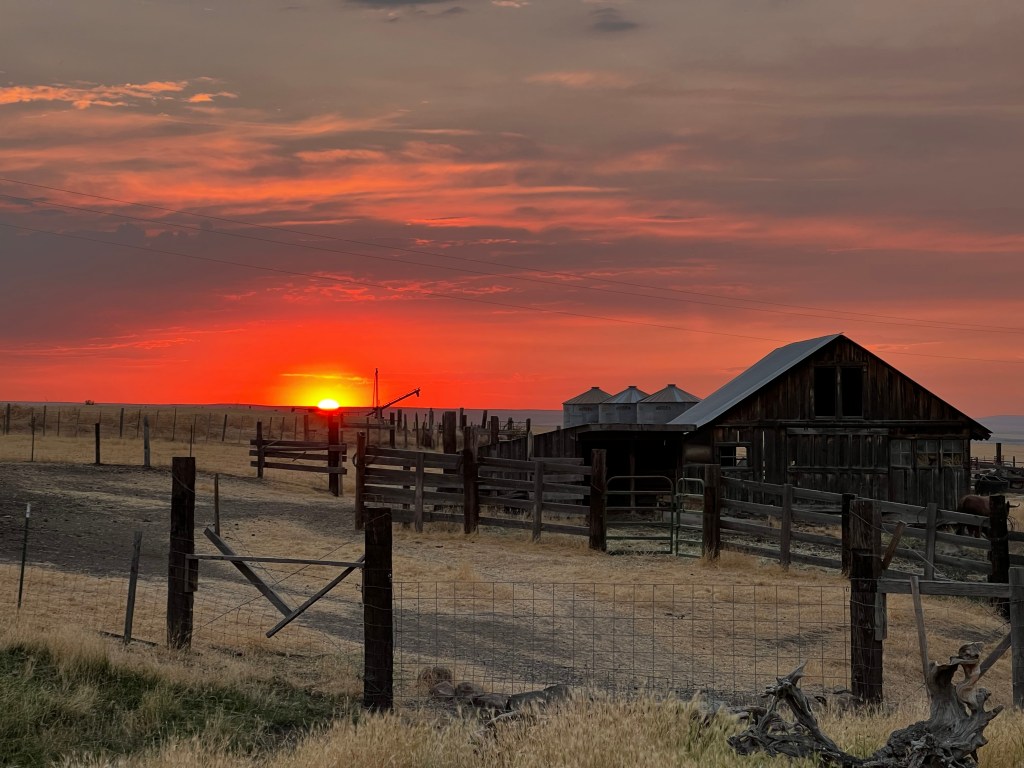
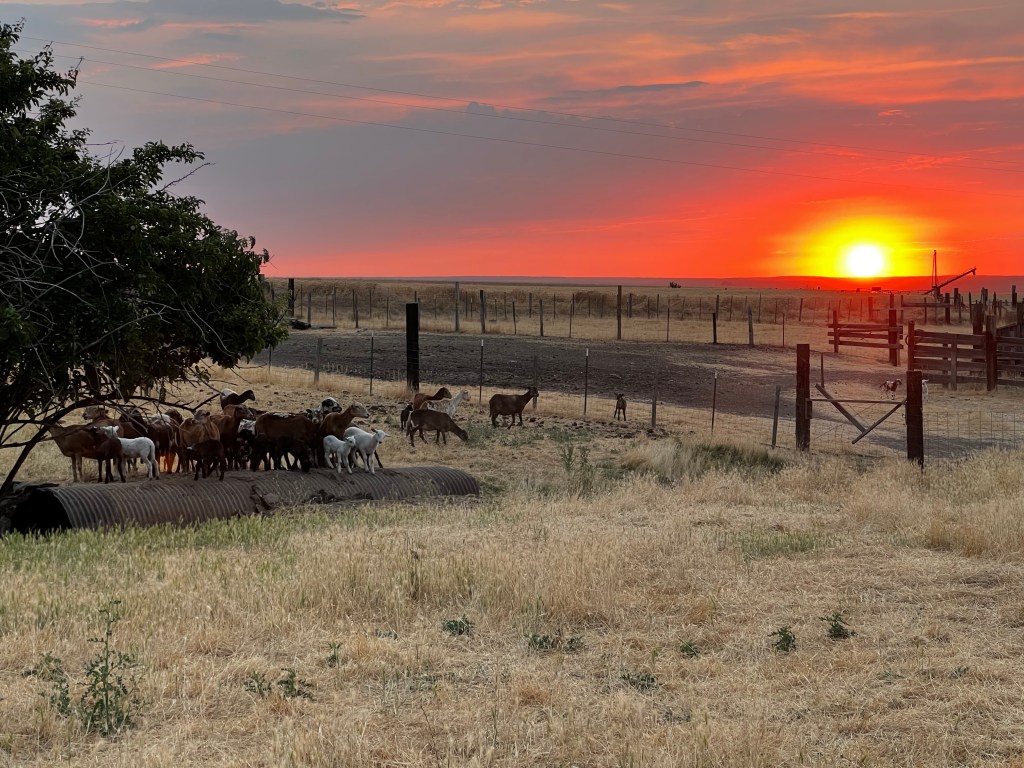
We have let the sheep out of the barn lot and out into the upper field #4, they can also use the walkway we created alongside the wheat to get 1/2 mile away from the house. Due to the nature of all of the coyotes around here we are now forced to bring the sheep in every night. The first few nights are always the worst as you are teaching the sheep to come in at night. After that they will start to put themselves in every night. Tonight it was merely a matter of walking out and shutting the gate.
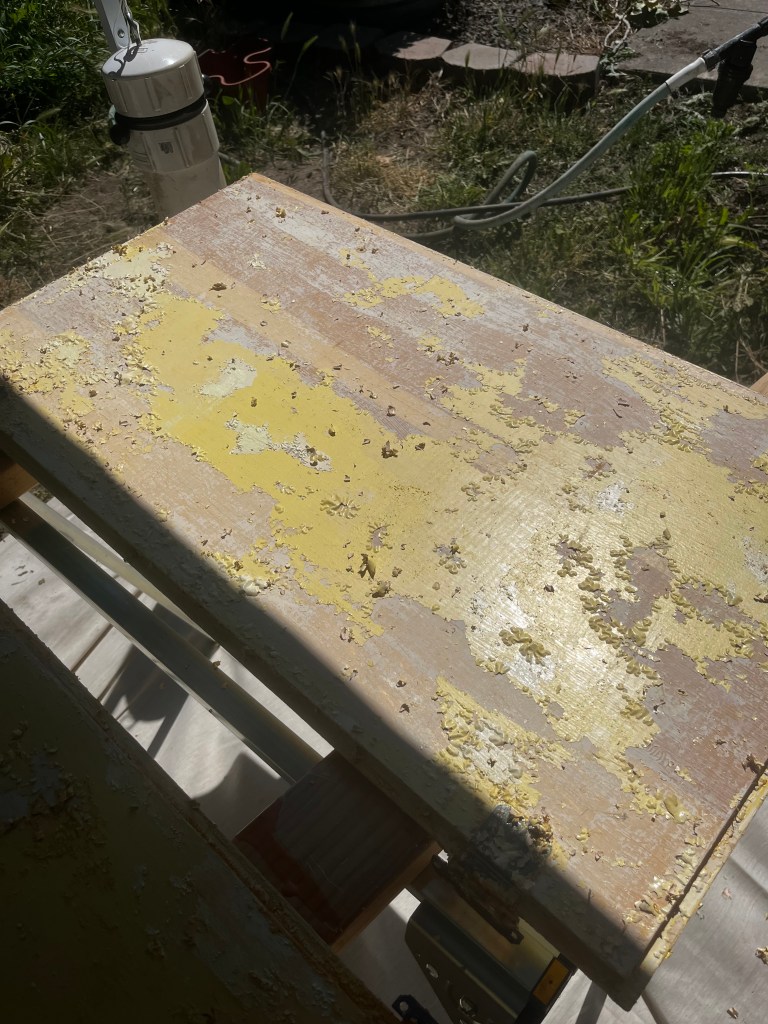
Annmarie and the girls have been working on the kitchen cupboards. They are stripping and repainting them. We knew this was going to be a very labor intensive job and have been putting it off for a few years. We bought paint samples and even painting the cupboards in places to compare colors and get the right ones. We wanted to bring out the colors in the backsplash and countertop. They have been working on it for three weeks now. The cupboard doors are almost ready to prime and paint. We just have a little stubborn paint at the 90 degree on the door side that would stop the doors from fully closing so I need to get it out. I think I will have to take a razor blade knife to get it out easily.
Annmarie has been diligently working on it. The paint stripper is citrus based but it still gives me a headache when they use it. After a few coats of that and scraping it off they sand it down. Annmarie has been doing the inside and Monica has been concentrating on the doors outside. We have some sawhorses and an awning set up outside to work under. It is slow and methodical work and they are all doing a great job. We have all new hardware, hinges, magnetic latches, door knobs and pulls. I have been informed that I will be doing the hardware install. But honestly, I am getting the best deal possible when it comes to this job. Once the second set of cupboards are done then we will pull out the fridge and do the lower cabinets and the little cabinet over the fridge at the same time. This will mean no ice maker for the duration of that time! This is a painful prospect when it is 109F.
The amazing part is our back runoff creek is still running even though we have had record high temperatures all week. I don’t think it will last another week as it has really lowered this last week. The puppy, chance had to go to the vet because she started peeing every three minutes! Turns out she has some kind of fecal infection from something she ate out here. We tried to make a list but it was fairly disgusting so we just chalk it up to her being a puppy and her gut needs to toughen up. We are treating it with antibiotics and she is doing much better. Gizmo had to go to the vet also four days earlier for a bloody nose and unceasing sneezing. He had a piece of cheat grass up in his sinus cavity. They got it all out and after a few days on steriods he does not even snore any more! He is also doing great.
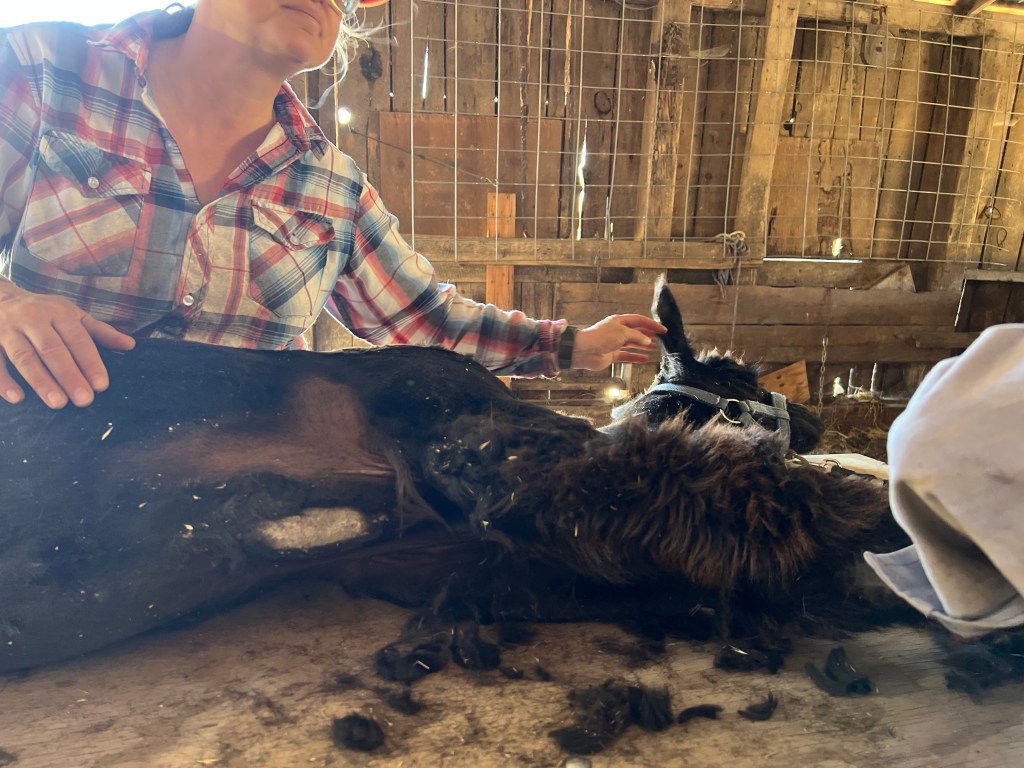
Every year we think we are going to get better at shearing the alpaca. I am not sure why we think that as we only do it once a year. We have five brand new alpaca this year, three of which have never been sheared as they are only one year old. This really means that we have an even dozen alpaca that need sheared. On average it takes us about an hour to shear one alpaca so the plan was to start early and shear all of the alpaca in a day. We started on a Saturday morning first thing, but by the time we gathered all of the supplies, strung power extension cords out, cleaned up the milk shed area and got the alpaca corralled it was a couple of hours later.
Now it was time for the real fun, catching the alpaca. The general concept is to get close enough to just sink your hand in their fiber and hold on until you can get a hold of the head and control the animal. It is fairly simple but not as easy to implement. After they got around us a couple of times and some yelling occurred we pushed them into the corral then waded in and got one. Now you put the halter on and the animal needs to be walked/drug over to the shearing table. It really depends on how old they are and whether they are halter trained. Our old alpaca are not halter trained. The only training they have is learned inherently, passive aggressive transport. The minute you get a hold of them they lay down on the ground! They cannot be drug across the ground as you are trying to keep them fairly clean. So they have to be lifted up by two people and carried to the shearing table then thrown on. Luckily, Daughter #2 has been working out and can squat 80+ Kg. She needed all of that muscle to help get the alpaca up onto the shearing table. Once up on the table we had to tie down their head then stretch out their feet so they looked like they were on a medieval torture device then the shearing could begin.
We started off easy with an old one, he laid there fairly well, we trimmed his toes as he was getting sheared and the shears worked well. It only took about 45 minutes. We did not need to grind his lower teeth flat and no fighting teeth needed cut off. The next one was a baby who had never been tied to a table or sheared before. Holy smokes, their fiber is totally different than an old alpaca. It has a ton of crimp, it is very thick and very long. It was very hard to shear, I had to keep oiling the blades and adjusting them constantly to get them to cut correctly. I ended up having to change the blades through midway on each young alpaca. We did all three yearlings and four old alpaca in seven hours. I was shot after that, my lower back was killing me from reaching out and shearing.
The yearlings absolutely hated the shearing table and being tied down. They kept panicking and kicking and getting untied. At one point, we had one standing up on the table and had to pull it back down, stretch it out and tie it back down again. It was brutal. Annmarie is going to make some alpaca sized hobbles so when we put them on and pull them from the center they will self tighten and if the alpaca fight they will tighten some more. After doing three yearling we contemplated whether paying to have them sheared is a viable option. Our real problem is there are 12 of them now!
The next day we all determined that more alpaca work should wait until the following weekend and all of us have had some time to recover. I ended up going over to the neighbors and baling 120 bales of grass. He had a patch that went to seed and was dry so I was unable to bale it. It was tall and green at one point, I just could not get to it. I still have one small field at another neighbor’s house but it needs to not be 108 F outside so I can go over at cut and bale it.
A week later we went out and finished the last five alpaca, our two new older alpaca were also a pain in the behind. They were used to being sheared but they were very scared during it. Padre is our biggest alpaca and he is twice the size of some of them. He was not very cooperative and he had to lift him up onto the table, it was at this point that Monica’s ability to deadlift really came in handy! Between the two of us we were able to force him up onto the table with people power (ie manhandle).
It is always amazing to see how small the alpaca really are after they are sheared. We really needed to do it a month earlier but haying kept delaying it.
After work on Thursday I needed to finish haying, the real problem is I have been awake since 0400 and am not highly motivated at this point. The trouble is I know if I don’t go out and do it then it may not get done. So after dinner and after dishes I went outside to go bale more hay in field #2. We need to get the dried grass off of the field so that we can do a second cutting. Both field #1 & #2 will be ready to cut again in two weeks. There has been so much hay and it has been such a hassle to put it all up with this microhay equipment. I finally just gave up on getting field #3 finished.
I will go down and push all of the rows together to form 3-4 large rows down the middle of the field and we are just going to leave them. When we let the animals up later in the summer they can dig through the piles and eat whatever they want. We did the same thing after the flood two years ago and the animals will tear it up and eat whatever they want. There is just not time to do it all. We have talked about bigger hay equipment but currently we don’t want to spend a bunch of money. So we are going to fix the old John Deere baler we got last year this fall and see if we can get it repaired and ready for next year.
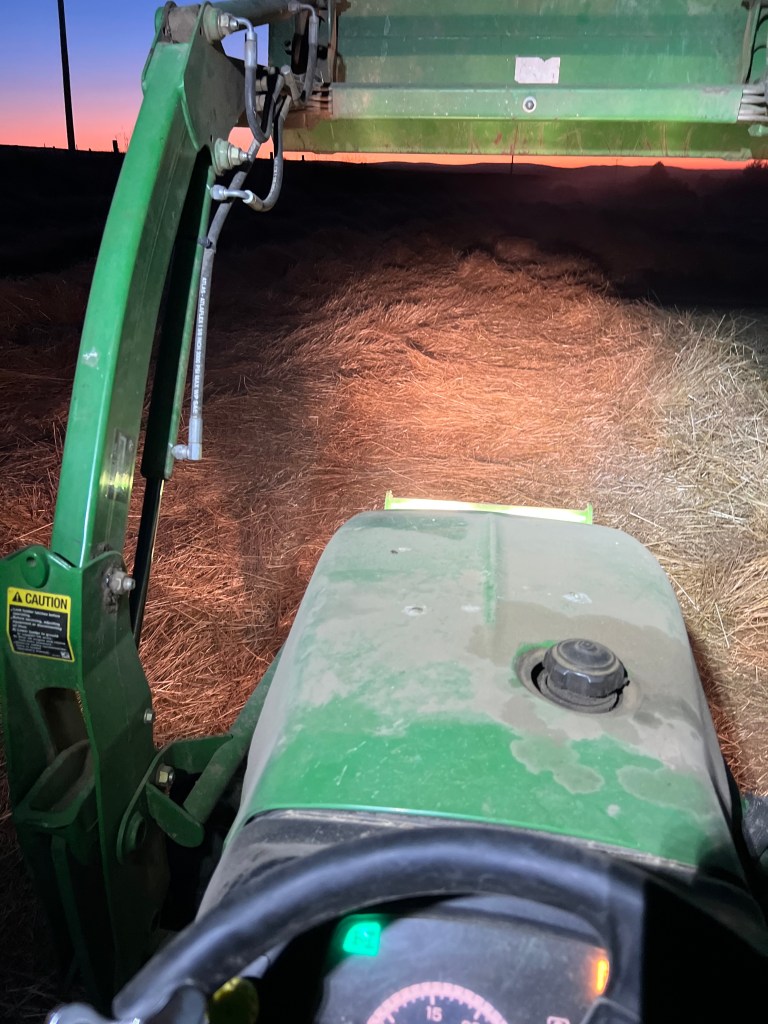
I got on the John Deere little tractor and went out with my Italian M50 baler and baled in the dark. I managed to bale four tons in about 4.5 hours. This is dang good speed and not normal. I did not break a single shear bolt and everything went incredibly smoothly. The grass was very thick so the bales formed quickly. Mr Professional had to pull another two links out of main baler chain and we have worn down some of the gear teeth. I tried to order new sprockets and Ohio based company did not have them, they were literally on a slow boat from Italy in a shipping container headed their way. I kept looking on the internet in the hopes I would find somebody in this country who would have parts for an Abbriata M50 minibaler. I found a new baler for sale in Oregon! So I called up the dealer, then the parts dept, got a hold of a very helpful parts person who had no idea they were selling a Sitrex baler. In the pictures it looked like my Abbriatta with a different name. I gave him my Abbriatta parts numbers and he sent that to his parts supplier who sent it to Italy and the next day Italy has the parts! Mind you the Sitrex parts catalog was identical to the Abbriatta! So the slow boat plan is still in progress. I will keep looking and hoping that the internet will find me someone in the United States.
I stayed out until 0200 baling, came in and cleaned up, went to bed and was up by 0830 to get out and mow some more hay at the neighbors. He had volunteered to allow us to cut a couple of his small fields. But before I could go out and cut hay I had to fill up tractor with hydraulic fluid, grease entire tractor and sickle bar mower. But to grease sickle bar I had to install a new grease zirk and then change out the grease gun head to be able to add a ninety degree head. I had to tighten the bolts on the mower and ended up installing the hydraulic lines backwards so the control for up/down was reversed. I did not bother to change the hoses so I spent the next three hours cussing it the entire time. While mowing the neighbor’s field I ended up having to pick a few tractor bucket fulls of rocks due to all of the rocks in the field. I had to to go around in patches to cut the good stuff and left the bad weedy areas. I will come back after I am all done and just run the flail mower over the entire field.
I came home and wife talked me into going to town for the farmers market. When we came back I took a 30 minute nap on the front porch and then spent another 30 minutes convincing myself that I really did need to go outside and do more work. I did get up and go turn hay in field #3 in the dark for three more hours.
I had talked to Daughter #2 about helping me fix a couple of fences after work this week so on Wednesday after dinner and dishes we went out to work on ”two” fences. We needed to fix the orchard fence where we had the breakaway panel give way during the flood and we needed to fix the fence from field #3 into field #4A. This seemed fairly simple and I was pretty sure we could do it in an hour, I failed to take into account how a city person from another country would anticipate fixing ”two fences”.
I had gone out to inspect the fence in the orchard the day before and noticed that the deer, specifically a male deer, had torn up several of our fruit trees. They are five years old and I thought the deer could no longer harm them. I was wrong. He tore up the middle of four trees. So now I will need to construct a six foot fence around the entire orchard which means installing seven and a half foot tall T-posts and figuring out how to extend the wooden posts up another four feet. I think I will use smooth wire but may have to use woven, I will need to do more research.
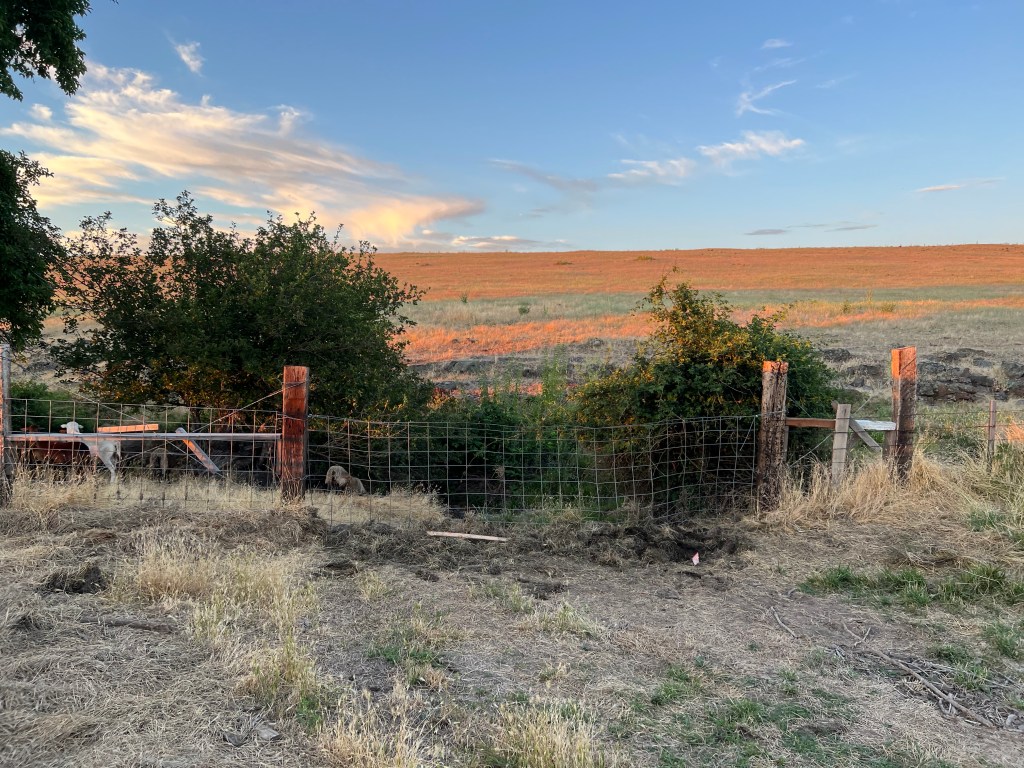
So we head outside, grab the tractor and some tools. Daughter #2 is unsure why we need the tractor. We got over to the panel, after pushing the sheep out, and discovered that the entire panel was covered in mud and grass which made the panel impossible to lift. We failed to bring a chain with us so we just hooked the bucket hooks onto the panel and stood it up with the tractor. Once we had it up we could tear off all of the grass and mud, while fending off the sheep who wanted to come back into the orchard. We managed to pull the top cable tight with a fence tightener and got the cow panel back up and stretched tight. As we were headed to field #4A I noticed that the gate going into our tree orchard was off its hinges and needed to be fixed before we stuck our brand new bull in the pasture the next day! So we diverted and fixed the gate then we went onto field #4A. We had to fix another cow panel in the middle of the fence that was installed to allow us to cut it loose should we have another flood. Since it flooded and we cut it loose we did not lose any of the fence line. This was a very nice win for us. So we reattached it and Daughter #2 was ready to go inside except we still had to fix the spring ditch crossing in the corner of that same fence. So after I announced our fourth repair job needing attention I was accused of ”gaslighting” her on fence repairs. I had to look up gaslighting on the internet because I told her she had to be using it wrong. She told me in the UK they use it for bait and switch situations also. I still think she is confused and I told her that this was normal fence repair stuff! Without fixing both holes in the fence we cannot let the cows into pasture #4A. We fixed it in the dark by tractor light and then went in. On our way out to field 4A we discovered that the sheep had torn into 12 bales of alfalfa hay from last year, that would explain why they are all so fat! The lambs are bouncing all over the place and we continue to have more lambs. There are only about five ewes left to deliver.
Annmarie and both daughters started in on our kitchen cabinets. They are stripping them in place so we can repaint them. The problem is they are built in and have four coats of paint on them. They made great progress and we have a popup shelter and saw horses set out back where they can work on the doors. This means that everything from the cupboards will need to find a temporary home while the kitchen work progresses. Progress is never painless.








 Stewart Creek Somethings