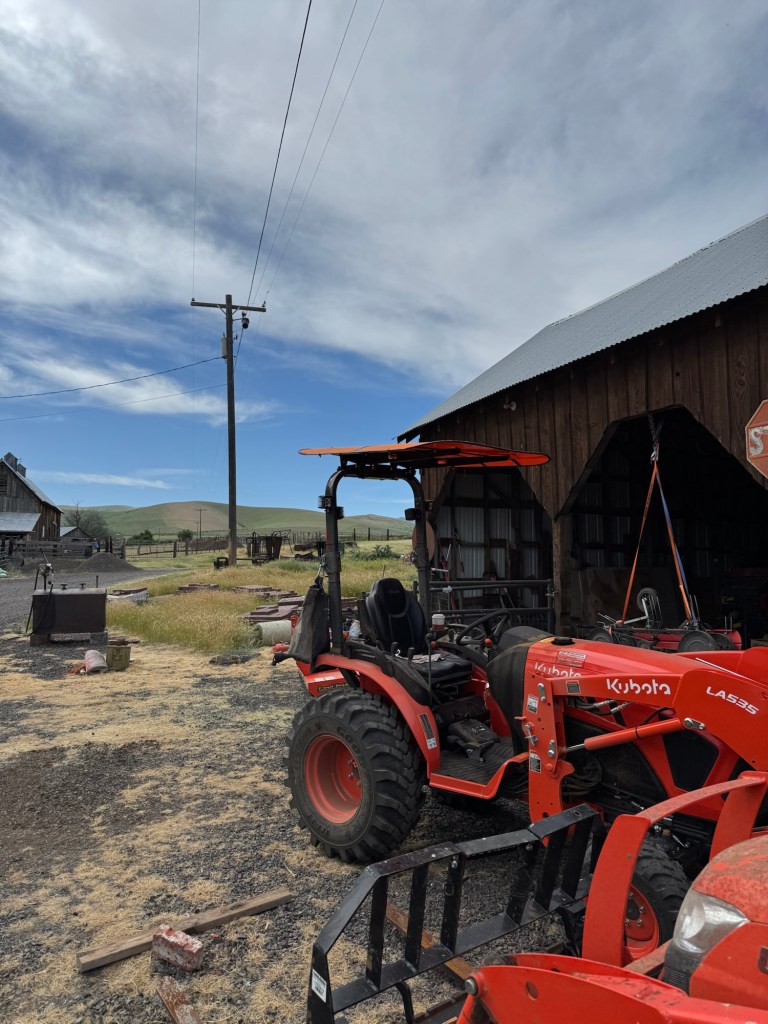
By the third dayI figured that a little bit of sunscreen on my face was not going to help if I spent all day on the tractor again. I had already managed to sunburn my lips. I took the, still in the box, sunshade that had been purchased for the older Kubota (Clementine) and installed it on the new one (Juicy). It took a couple of hours to get it all pieced together and up on the tractor. This one has a very nice locking mechanism that virtually makes it impossible for the shade to blow off the tractor. It is quite clever. After baling hay for an hour I asked myself why I did not do that two days earlier! Keeping that direct sun off of your face is a huge relief.
The hydraulic takeoffs do work! I only need one to get the dump lid on the baler to work and it worked great once I got the port all cleaned up. It had a lot of dust and dried grass in it. Unfortunately, I did order dust caps but do not order them by the size of the plug. They are ordered by the size of the hose. I did not know that until the wrong ones arrived in the mail. The correct size is now on order.
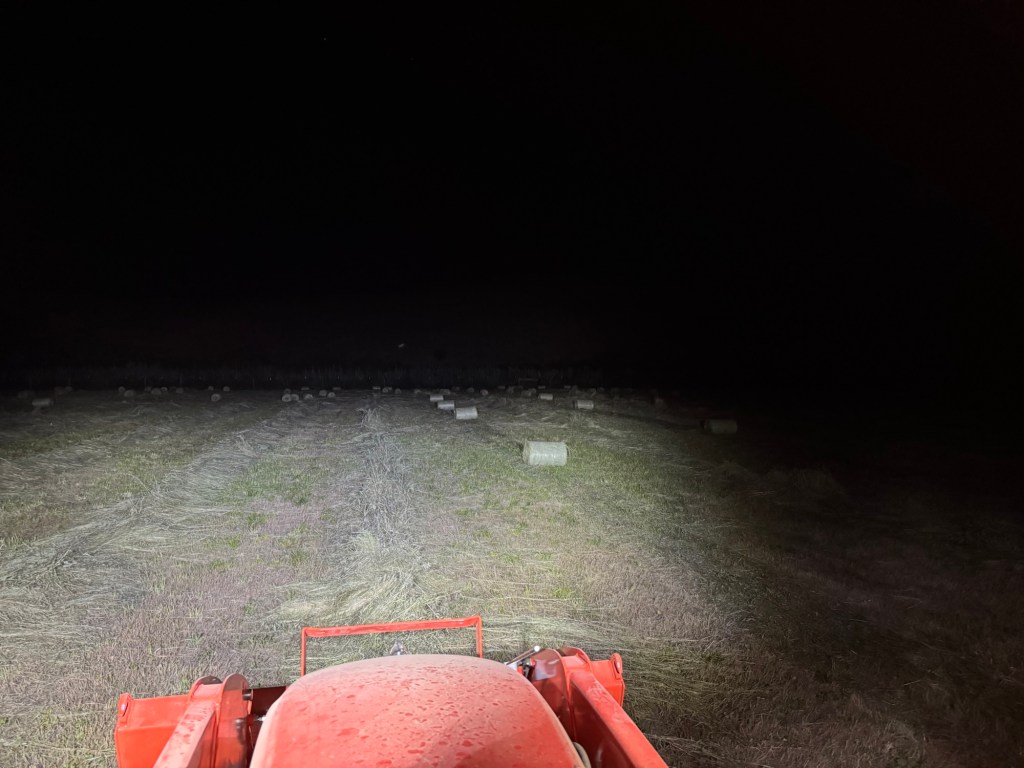
I spent all of Sunday baling hay until 2330. I really wanted to keep baling but we had scheduled help to come out on Monday at 0800 and help us with shear the alpaca. The haying got a lot easier once the sun went down. The moisture started to come out and the grass was not as slick. It baled super nice, no jams and it just wound up without any difficulties. I made twice as much progress after darkness hit. I started to just pick the big rows to bale as it was so fast. I figured I could get the smaller rows after we sheared the alpaca.
We had four alpaca that I had managed to get pinned on the back hillside. I thought they would cross the back creek. Nope, I ended up taking a header into the creek when the alpaca I was attempting to drag across the creek suddenly jumped and scrambled up the opposite side. Of course that same alpaca ended up jumping back across the creek to be with his buddies. One of the babies kicked Annmarie in the lower leg. It was a solid blow. That same alpaca proceeded to try and give us all the rear kick anytime we walked up behind it. So we grabbed it from the side when we drug it into the shearing area. It has grown significantly, it is probably our biggest alpaca now.
We did eventually get all four alpaca across the creek and I did not end up in it again. We only have six to shear, trim feet and inspect/cut teeth.
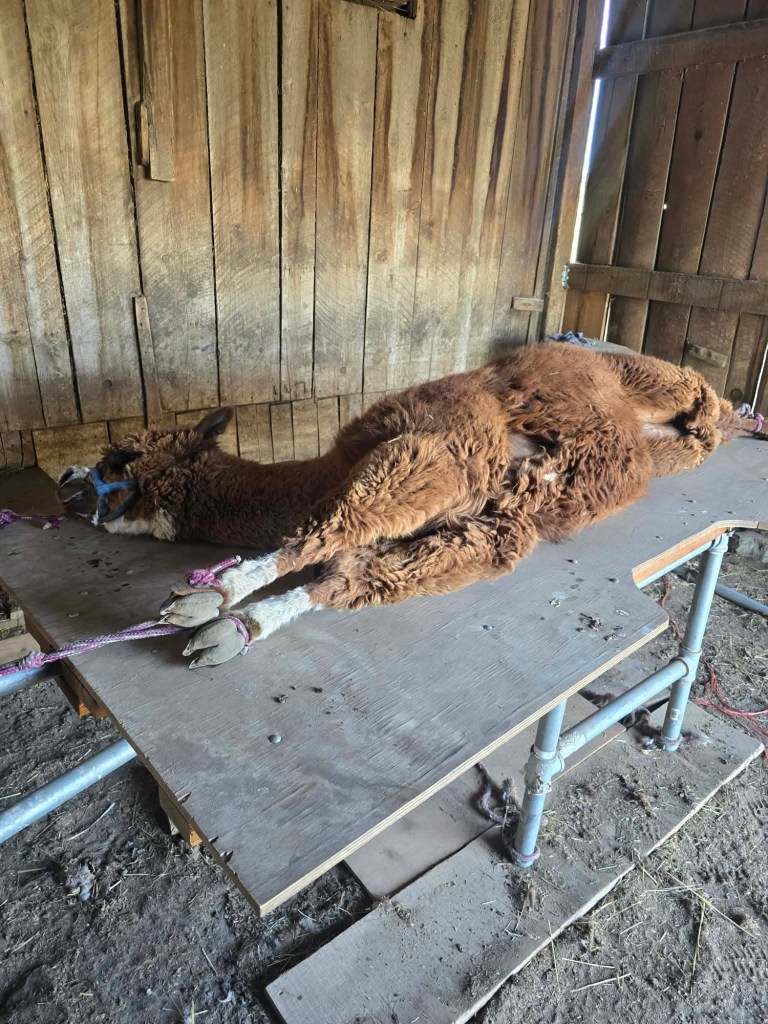
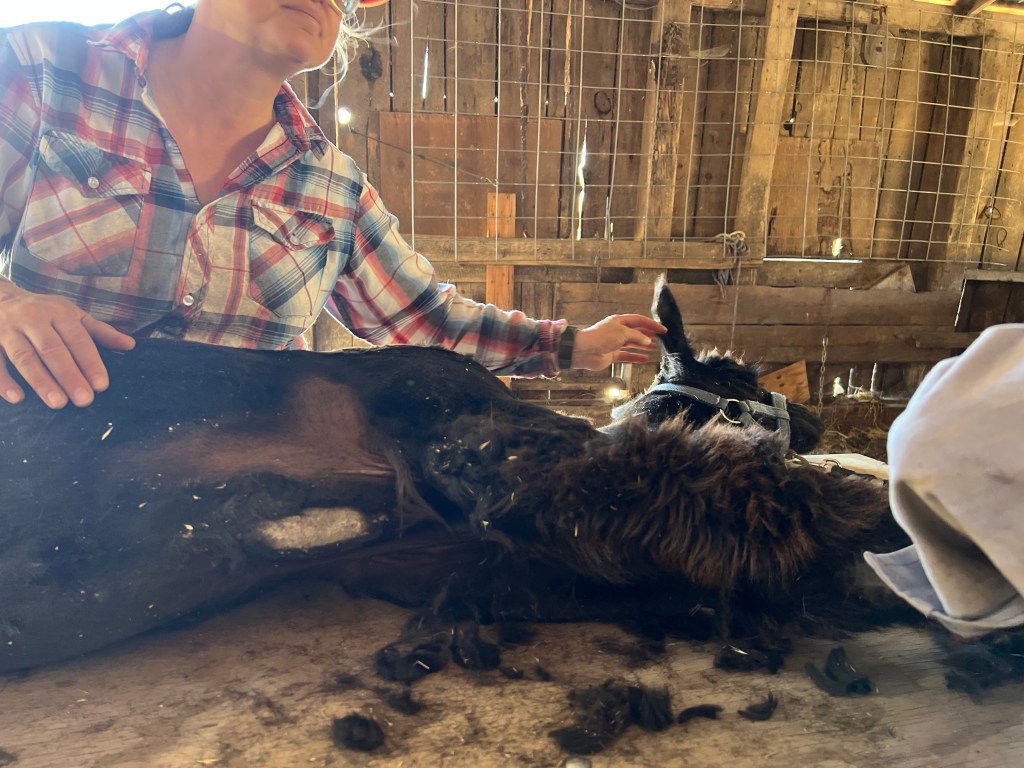
The shearing table makes it pretty easy to do everything. Our helper, the Quiet One, had never sheared alpaca before but she had just paid someone to come out to her place and shear her two alpaca. It was decided that she can just bring hers over to our place and we can just shear all of them on the same day. We had all six done within three hours. After three days of riding on the tractor my upper shoulders were killing me but I am getting much faster at shearing the alpaca than I used to when I started. I passed the trimmer off to the wife and Quiet One but ended up going back to it as I wanted to be done. I only cut three of them with the razor. No stitches have ever been necessary.
We dragged a tarp with the last two years worth of discarded hair over to the garden so we can use it as weed barrier. It makes great barrier. I showed the Quiet One how to work the new tractor and she will come out and mow the cheat grass down during the week. It needs it. I have been trying to mow the cheat grass while haying but once I started to bale nothing else gets done until hay is all formed into round bales. Once the bales are made I will leave them in the field for a couple of weeks. This is why I like the round bales so much better. They work for my delayed schedule.
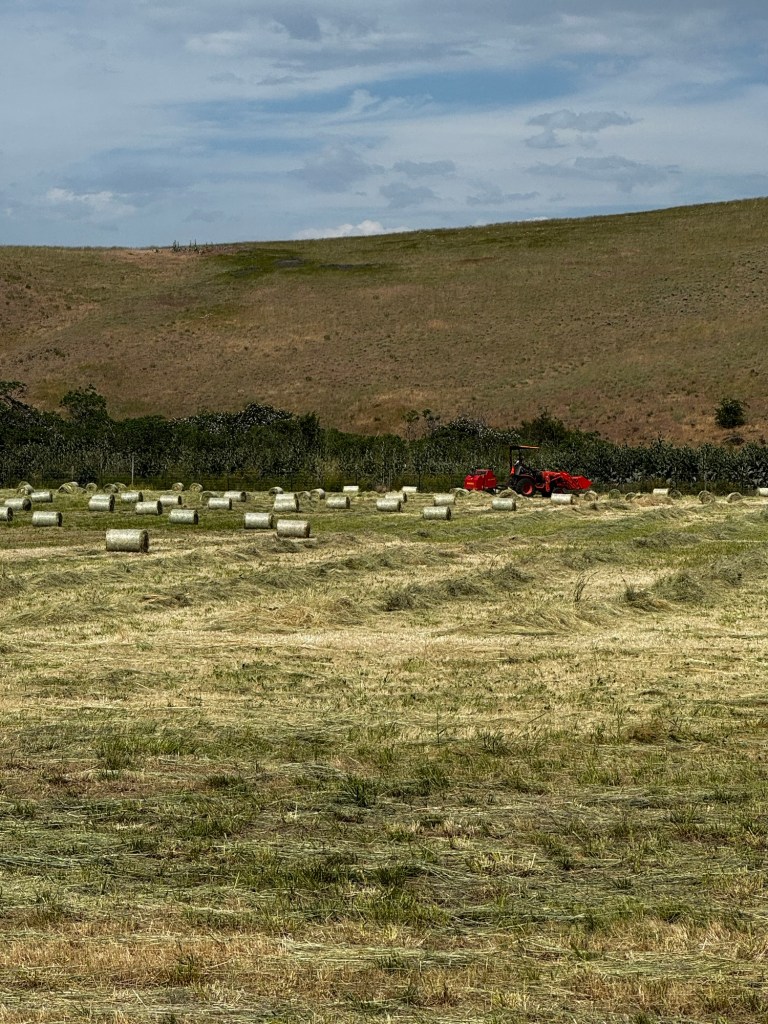
I called in to the house and the wife brought me coffee out to the field! It was one of the best cups of coffee ever. I needed that coffee. Going around and around and watching the baler is monotonous. Even if I did manage to knock out two audio books over the weekend.
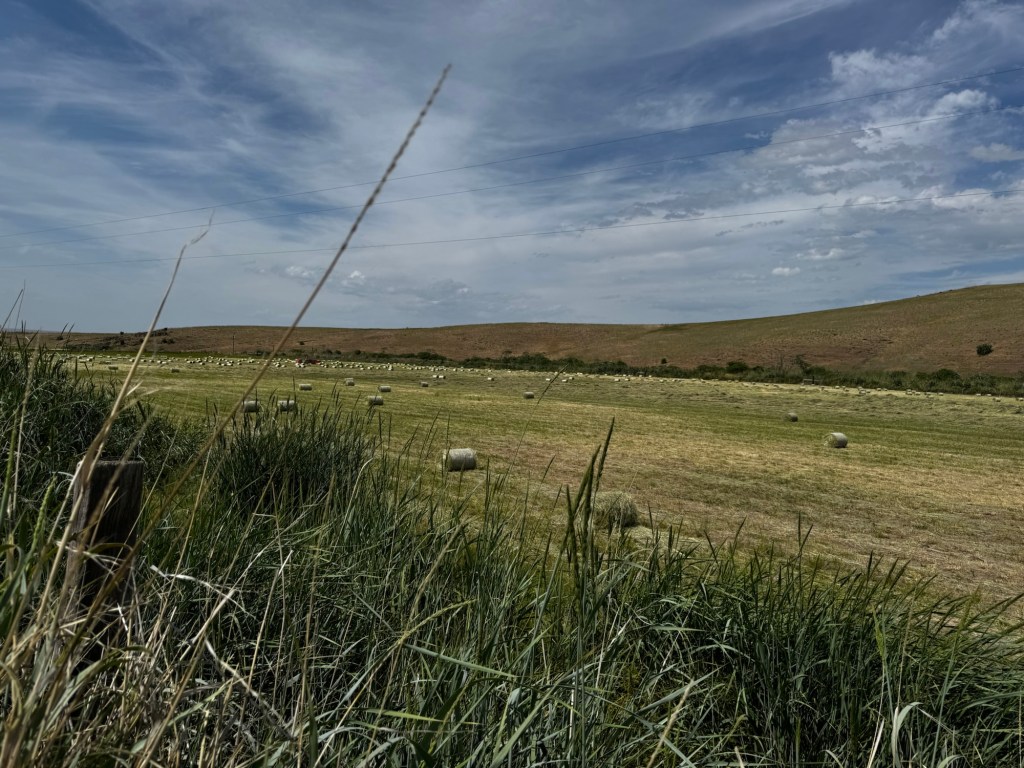
I went out and started to bale for another seven hours. I had enough material on the ground for approximately 12 more bales when the big boom was heard. The shear nut gave on the baler and I tried to replace it. I could not get the baler tines to move so I figured I better look closer to see what made that noise. One of the pickup tines exploded and broke some stuff that pinned the pickup shaft solid. I need three hours to tear into it and replace all the parts. It is close enough to finished to call it finished!
I now have to fix the sickle bar mower, the rake and the baler before I can cut some more hay. My plan is to fix the mower, cut hay, then fix the rake, rake and then fix the baler! As long as I get it fixed before I need it I am good to go.