On Friday I had Mr Professional out, he and I went over to the Metal fabricators and picked up my five heavy duty 12 foot welded gates. The bull will not be able to tear these up at all, no matter how much he tries. We got them all loaded up on the trailer and unloaded into the machine shed. I need to spray paint them before I hang them up. I will be doing that very soon. Annmarie and I had already talked about fruit trees as they had just come into our local feed store last week. I like to plant them about 45 days from now but by the time I am ready to plant the selections left at the store are pretty slim and I don’t get all the kinds I want. So we bit the bullet and just went into town and bought some fruit trees. The plan was to buy six trees, we ended up with eight trees, Mt Royal Plum, Honey Crisp Apple, Tilson Apricot, Royal Gala Apple, Golden Spice Pear, Summercrisp Pear, Rainier Cherry and Black Tartan Cherry. Mr Professional and I went around the orchard and dropped off all the trees where we wanted them to be planted.
We removed the top half of the cages around the old trees and I started to trim all of the fruit trees from the ground. Mr Professional took the tractor and changed out the box blade for the post hole auger. We drilled out 9 holes as Annmarie wanted me to go to her grandmother’s old house and try and salvage a Italian plum tree. Once the holes were drilled we used the tractor as a more efficient ladder so that I could trim the upper branches on the trees. This is far easier than dragging a ladder around. I had not really shaped the trees in the last three years and spent a lot of time choosing branches and thinning the middle out of the trees. I am going to have to start spraying for bugs next year to keep the fruit bug free. The hardest part about this is you have to spray every two weeks during the summer.
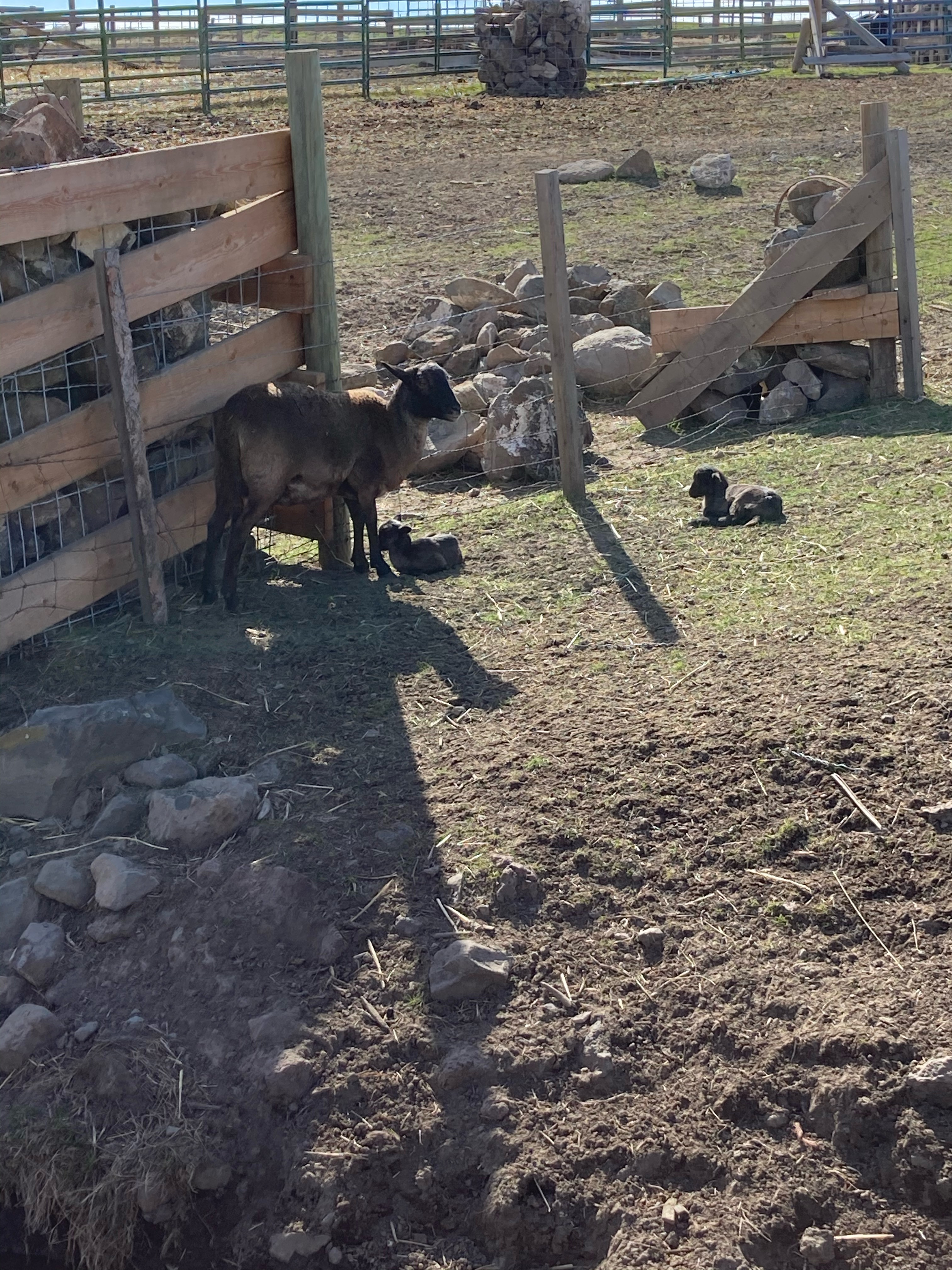
Well, we think we are done having lambs. It was pretty drawn out this year and our plan to stop this is to turn the ram loose with the sheep in a confined space. When he has to run all over the farm and try and catch all the ewes to breed he starts taking his time and we need a faster approach. We will be putting the ram in with the ewes in 1-2 weeks so he can start the process all over again and we will have lambs again in five months!
Lamb finalized
49 lambs born alive
32 ewes delivered
0 pregnant ewes (we think….)
15 single lambs
17 twin lambs
3 bummer lambs, all survived
29 lambs on the farm
150% birthing rate
144% production rate (goal >150%)
96% survival rate at birth
98% survival rate at 2 weeks
Annmarie has already sold 20-25 lambs to a person nearby who wants to start their own herd of hair sheep! The truly amazing part is this same person wants to run them in with his Dexter cows!! We got a good laugh out of that as we thought we were the only ones in the area who had done this. He wants the sheep to eat what the cows will not which is exactly what they will do. He has not yet discovered the joy of eating a hair sheep and the fact that they are milder and sweeter tasting.
I started out the Sunday by tagging and banding the last two little lambs we had in the barn, a little boy and girl. I then mixed all the sheep together so we don’t have to manage two separate herds. I came in and started working on the bathroom shelves and while outside cutting lumber heard some squawking. I looked around the edge of the house and there was our pretty rooster in the front yard desperately trying to get through the metal fence to get away from the dogs. Unfortunately for him, he is too big to fit between the gaps. I was able to call the Border Collies off but our little ankle biter Brussels Griffin, Gizmo, did not want to leave the chicken and had to be hollered at. I tried to open the gate but that just confused the chicken and ended up just having to reach down and grab him and toss him over the fence. He got lucky and only lost about 30 feathers. I have no idea what he was doing in the yard, the chickens know it is not safe.
I went out to pickup the carcasses and once I got into the barn lot I decided I had better do a couple of things before just getting the carcasses. Annmarie and I had noticed the culvert that did not get repaired was undercutting the bank and drive over path. She was afraid if the horses got out they would try and cross this and fall through potentially braking a leg. So I dug out the old culvert, it took a few tries to get it above ground. I finally had to go clear all the dirt off of the culvert before I could lift it out of the water. I moved that culvert over to the other culvert and will work on getting it set so it takes the water coming out of the crossing and allows it to run down through the culvert and not eat out the bank edges. I will mess with that after the water level goes down some or I won’t mind getting wet.
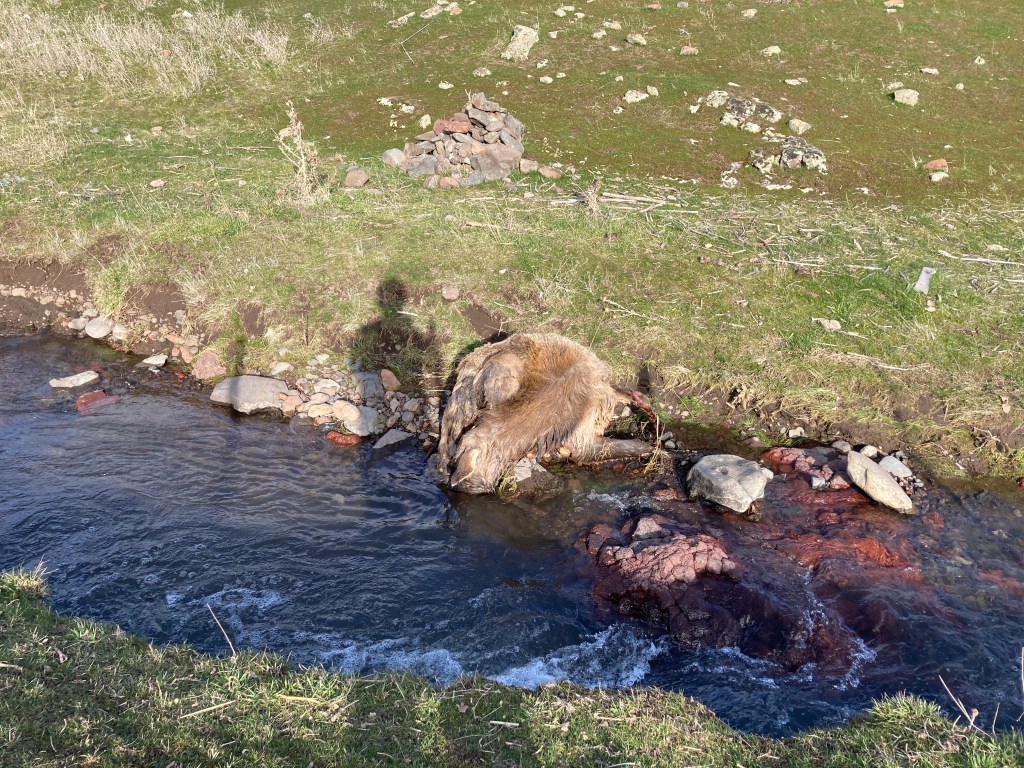
While I was messing with the culvert I spotted something in the back runoff creek. I wasn’t sure what it was but it looked like an animal carcass. My only thought was I hope it isn’t and if it is then please don’t let it be so decomposed that I cannot just drag it out of the water. I was able to just slide a chain around its neck and pull it out of the water. It had been dead for a few days only so it was still intact mostly. I took it up to the boneyard and then came back for the stillborn lambs, dead lamb and dead alpaca. It smelled bad but managed to stay in one piece while moving it with the tractor. I was eternally grateful that the carcass only smelled a little bit.
While I was dropping off the carcasses I noticed water running in an ancient ditch that has never been there before since we moved back in 2007. I will need to dig out the ditch again and make it a little deeper and give it some consistent shape. I will just have to add it to my list for the year. I am starting to feel better after my run in with Covid19. It has been eight weeks and this was the first weekend I did not notice any chest pain. My hope is that my aerobic ability will improve quickly now.
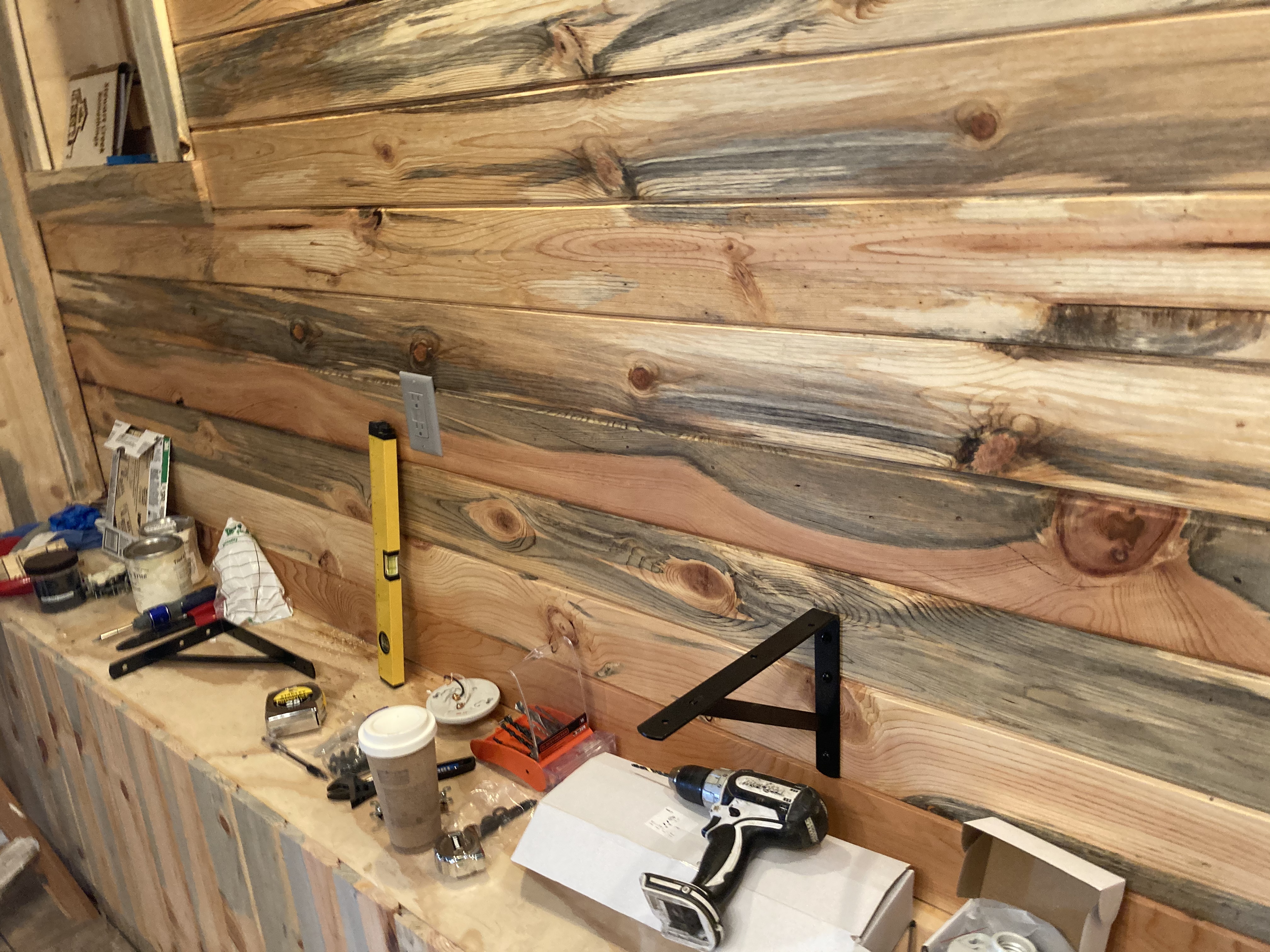
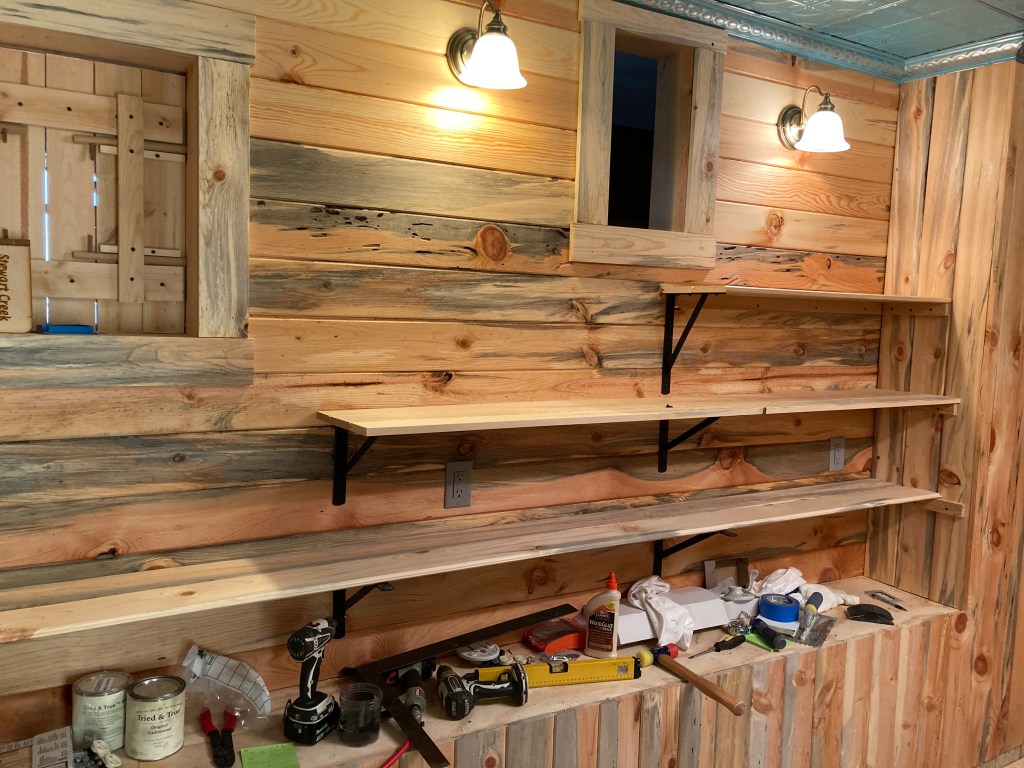
My plan was to spend two days working on the bathroom. I want to get it done and since the plumber has not been here yet we still cannot use it. I ordered metal shelf brackets for the shelves. I wanted the shelves to get shorter and shallower as you go up the wall. I did not want to get two different size brackets. I was able to find a 8×12” bracket that I could just turn upside down for the shallower shelf. I knew I was going to install runners along the wall and ends but knew the brackets were necessary. I was just going to measure up from the top of the heater box until I figured out that it is not level. So then I had to mark out everything and install the brackets so they were actually level.
I ended up having to tear 1.5” strips to go along the wall between the brackets. This way the back board could rest on the entire back wall and since they are tongue and groove and I am gluing them together as I install it. While I was doing that I decided to get the barn door pieces made and put on top of the glued boards. The boards were not perfectly even so I left about a 1/4” on each end that I will need to trim off before I can hang the door up. I started putting a nail pattern onto the door and ended up only putting enough screws in to hold it all together. I will need to go back and make it pretty before I hang it up.
I had plans on finishing the shelves this weekend but Annmarie wanted me to go it and get rid of the dead alpaca carcass before it started to smell. So I will have to finish them next weekend.
The sheep have gotten out of control! We keep having more lambs. All those sheep we sorted off last month because “they were not pregnant” have all had babies out in the main herd! Unfortunately, I think there are still 2-3 still left that need to have babies. I have lost track of how many we have had to date. Annmarie created a new spreadsheet and she has been keeping it up, I just need to review the data and post an update. Since we have had snow on the ground the sheep have really started going through the hay. I am pretty sure we are going to run out of hay in the barn. We only keep the small bales in the barn, the large bales are either sitting out or in the machine shed storage room. We have only used about 50% of our stored hay to date. I think we may end up storing 20 ton until next fall. This will cut down on how much we need to purchase next this year. It won’t cut it down by 50% but realistically by about 35% which is still better than nothing. I will probably end up pushing a big bale behind the barn for the sheep to tear into and eat what they want. They like to play king of the hill on them more than eat or get on top of the bale and while being king eat from the top of the bale. This will only be possible if the ground dries enough for me to move the bale with my little tractor. I have to make two 90 degree turns and the last turn is tight and if it’s muddy I won’t be able to make the last corner.
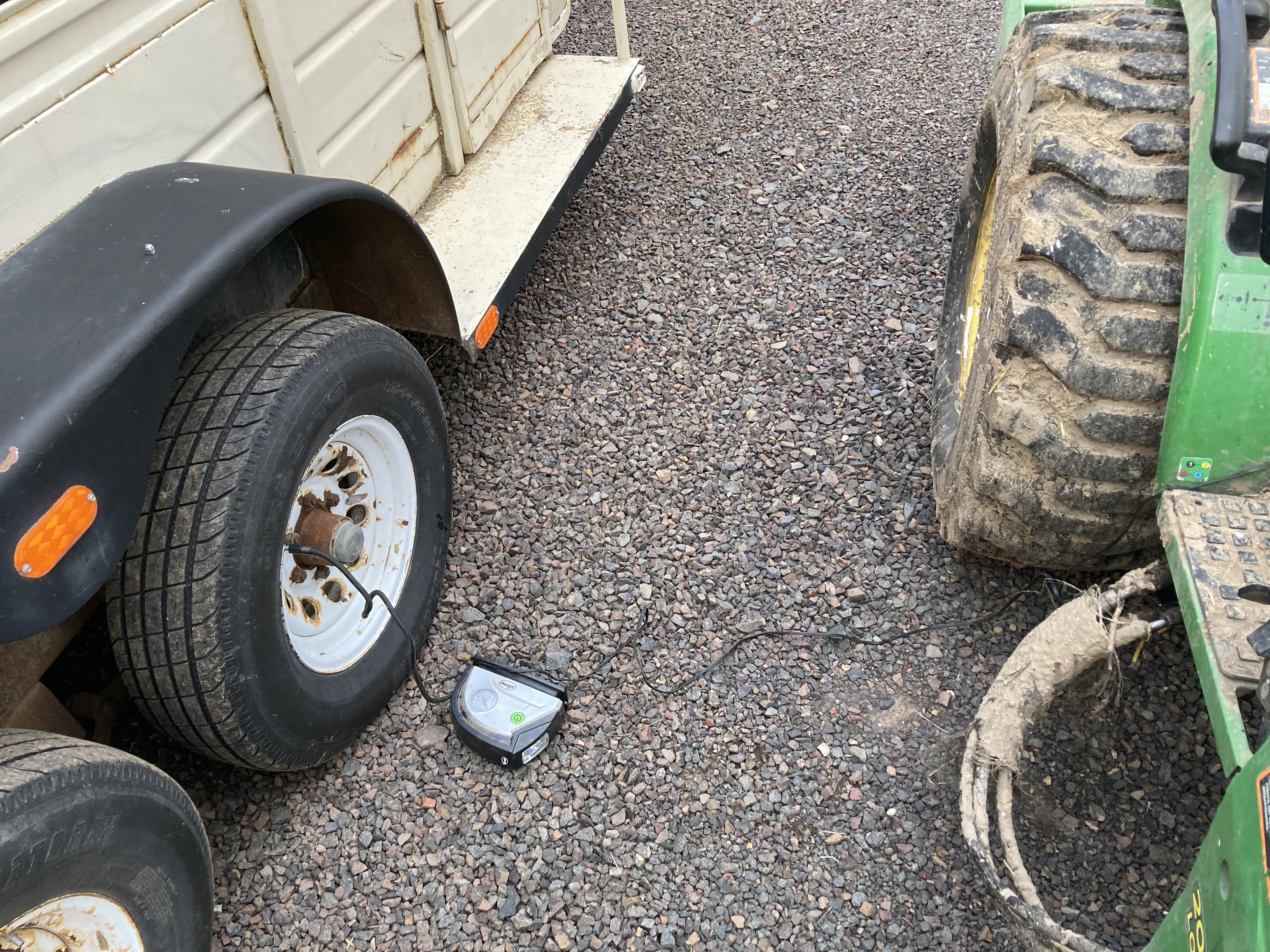
On Tuesday we found out that our butcher service was ready for two more cows and requested they be delivered on Friday morning at 0730. This means sorting the cows on Thursday evening, hooking up the trailer and locking them up in the corral so we can just chase them into the stock trailer first thing Friday morning. Honestly, the wife and I were both tired and we tried to push the cows alone and they would not go into the last enclosure. We just went and got the dogs and pushed them in. We usually try and just coax them in without the dogs first but it doesn’t always work. The dogs are more stressful on the animals than us just shooing them quietly toward the fence openings. Annmarie has convinced me that whooping and hollering usually doesn’t do much other than upset the animals, which it turns out is true. The dogs are far more effective than hollering and waving. Zeke still doesn’t like working the cows. He saw the sheep and wanted to go work them instead, I had to tell him we were working “cows”, he seemed a little deflated but went back to moving the cows out of the corner they had sequestered themselves in. Mouse loves the cows, he can stare them down, he can run at them, and if they still don’t move he gets to bite them on the heel or tail to move them, the sheep are boring. I always hook up the stock trailer and back it up to the chute the night before as this saves me from doing it first thing in the morning and it prevents the animals from exiting the corral via the chute. I had the trailer backed up to the chute, lined up perfectly on one try!! This is amazing after all the problems I had when we first got the trailer, it was brutal to try and back that thing up. I did have to pump up one tire, which is better than having to change one tire which is usually the case. The cows went right in and I drove them right to the secret location and unloaded them without a hitch. I thought about taking them for Dutch Brother’s coffee but decided we didn’t have time before their appointment.
I also managed to get the rest of our upstairs bathroom wired. I had a mild panic after I “misplaced” one of the outlet covers. I could not find it despite the 15 minute search. I used one of the other grey covers I had but it was metal not plastic and not quite the right color. I was hoping Annmarie would not notice. I was putting my tools away after job completion and the correct outlet cover magically appeared! It is now installed and they all match. I ordered simple metal shelf brackets last week and they came. If the weather permits we will cut 2” feather strips for the back of the wall and sides with room every three feet for a metal bracket. I want to get all the brackets installed without the shelves in place so I get the placement correct. This will make installing the shelves a simple matter of dropping them into place.
The last big news is we are having a full scale bug war at our house. The warming temperatures have caused the wax bugs and box elder bugs to come out of hiding. It’s crazy and we are killing about 30-50 bugs a day. I have finally resorted to using the Dyson portable vacuum 2-4 times a day to clear out the windows and occasional ceiling bug. I have sprayed the inside windows and it did not seem to do anything. It may be time to look at having new screens made for the windows. Ours have holes in them and are not all fitting tightly. When the weather gets slightly nicer I will start drenching the outside of the house in bug spray and see if I cannot knock down the amount around our house.
Annmarie and I have both been working on design ideas for the Craft Shack I want to build. I have been watching roofing videos on how to build gable roofs and dormers. She has been using CAD programs to draft out the size and inside layout. We think we have a final size. I want to use concrete columns with heavy duty floor jacks so I can level the building and make corrections in the future if necessary. Unfortunately that is 15 concrete piers with a $70 jack on top of every one. I do realize that the first layer is ultimately the most important to the long term viability of any building. We will start looking at prices of wood this summer. The cost of lumber is 2-3x higher than two years ago which is unfortunate for us. I am going to contact the two local wood mills and see if I can buy direct. The real kicker is what type of new and cool tool do I need to purchase to finish the job? I am thinking a rotary self leveling green laser with stand and a air powered framing nail gun. I have everything else we would need.