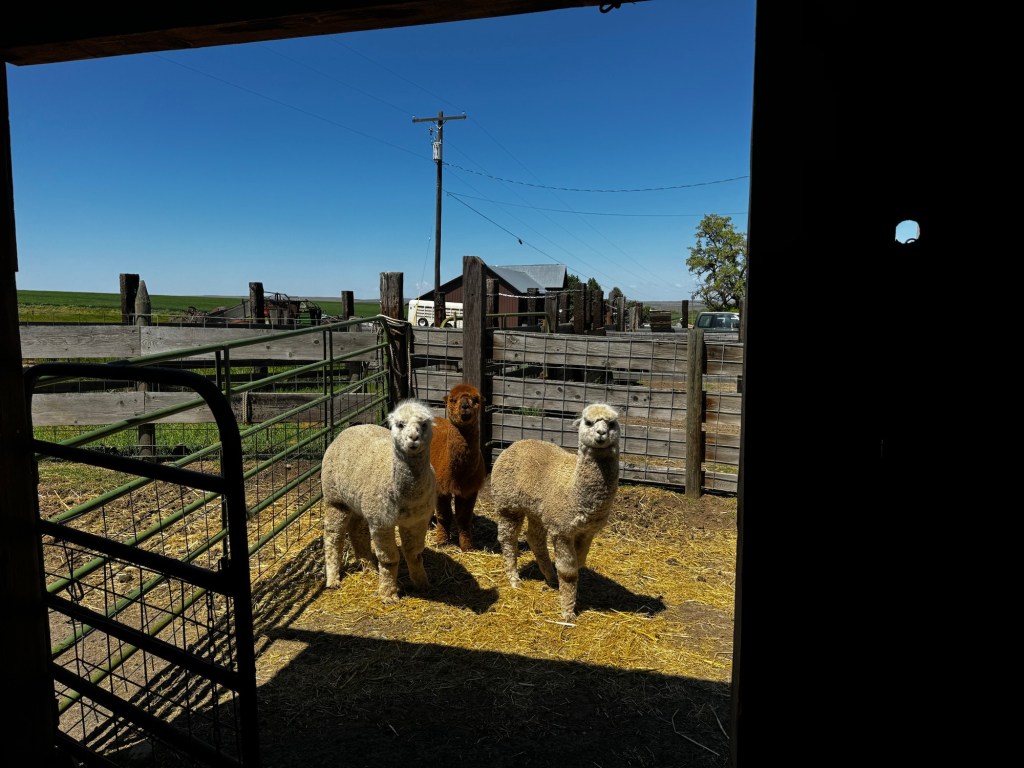
Annual alpaca shearing

Last week we got 1/2” of rain in two days! This was much needed rain but it did put a kink in the thought of cutting hay. I lined up some help for Friday and was afraid the alpaca would still be wet and we would not be able to shear them. I wanted to do it about three weeks earlier but failed to send off my blades to be sharpened soon enough and had to wait for the newly sharpened shearing blades to arrive.

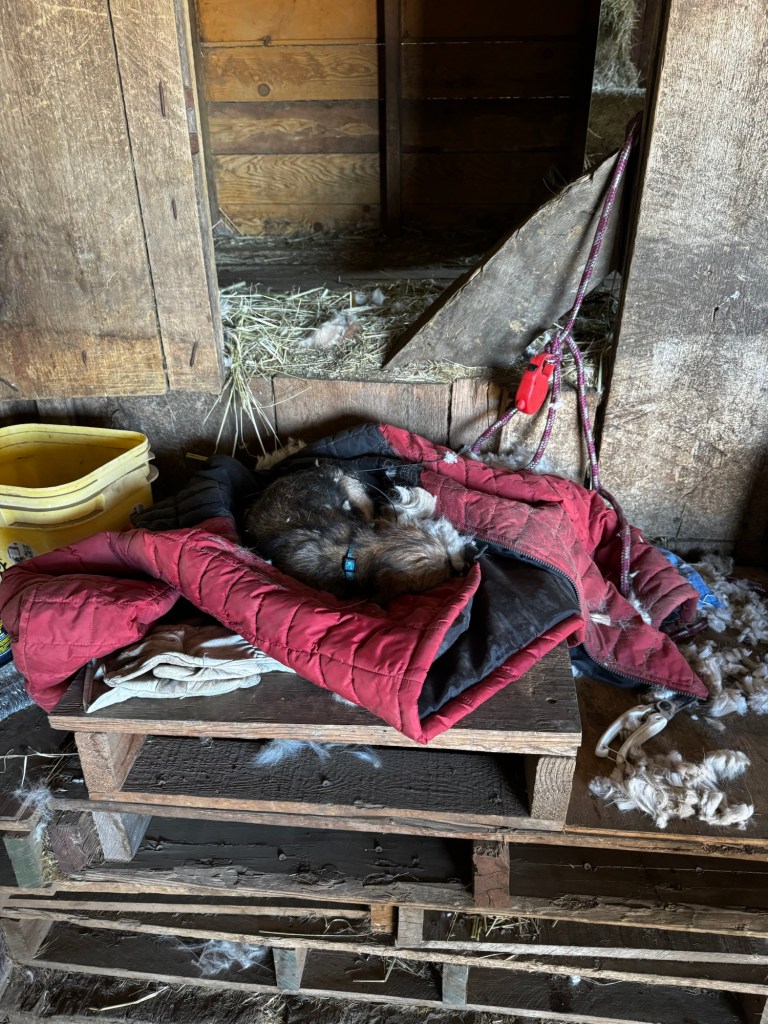
I was on puppy duty that day so Milo had to come out to the barn with me to shear alpaca. I had him tied to a lead in an attempt to keep out of the way. He was no always out of the way as he is a puppy. We had the area all set up and the alpaca in the barn lot ready to shear by 0830. Mr Calm helped me shear and Mr Rainman worked on weed eating yard, planting strawberries, cleaning up, stringing power and stopping to help us catch a new alpaca most of the time.

The shearing went amazingly. We took a 15 minute break and even stopped for about 35 minutes for lunch and still got done in 5.5 hours! The difference was there is not a ton of dust and no dried cheatgrass in their hair. I did not wait until the dead of summer for the first time! I have nine blades for nine alpaca due to how fast they get dulled. I only used 2 blades for everyone and we were done incredibly fast! No dirt and cheatgrass caked in everywhere made all the difference. I did knick one of the young ones a couple of times. Their skin is incredibly tender. Plus, one of the young ones had a couple of bad feet where the toenails had curved under its hoof. It was definitely deformed. We only kept the fleece from the five younger alpaca and of that only kept the best part, the saddle. It had almost no vegetable matter so should be super easy for Annmarie to clean and spin.
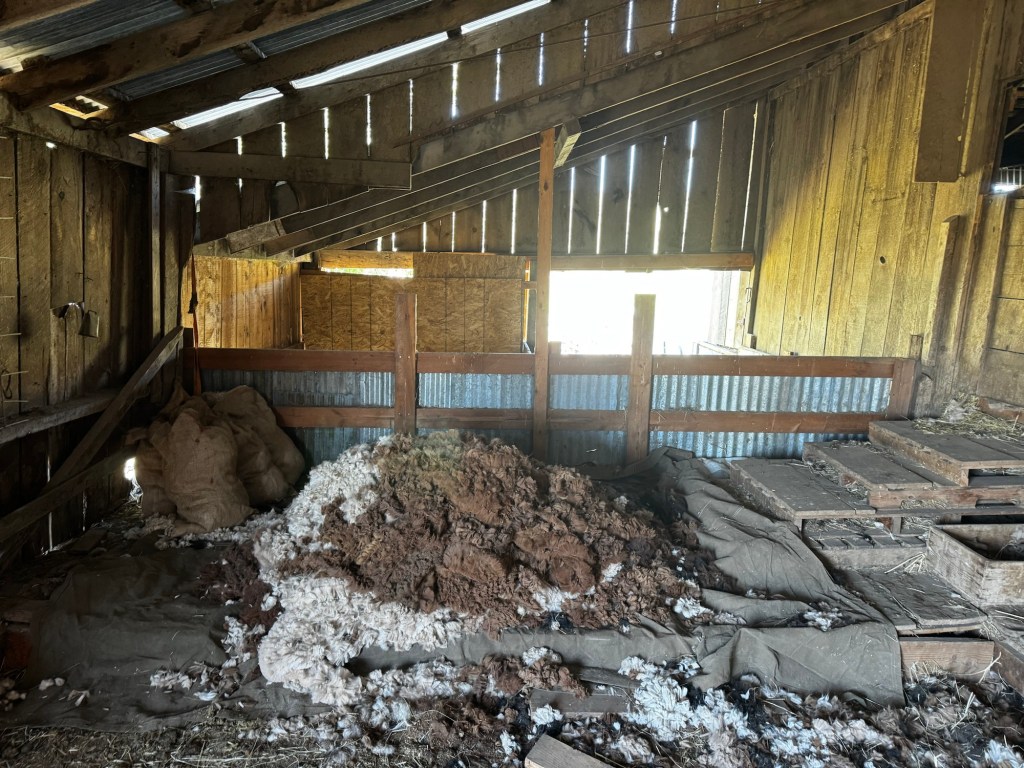
The old hair from the older alpaca and the seconds from the others will all be used out in our flower beds to keep the weeds down. It makes a great weed barrier. We have enough now to cover the entire area as long as we can keep the puppy from eating it. He loves to play in it. When we had only one alpaca’s worth the wind was blowing so much that the pile kept moving. He was barking up a storm and lunging at it. He was gonna get it! I had to move him over to the hay room entrance steps so he would calm down. Eventually he decided that a nap was needed despite the noise, the wind and all of the hair blowing around.
Alpaca shearing takes time

Every year we think we are going to get better at shearing the alpaca. I am not sure why we think that as we only do it once a year. We have five brand new alpaca this year, three of which have never been sheared as they are only one year old. This really means that we have an even dozen alpaca that need sheared. On average it takes us about an hour to shear one alpaca so the plan was to start early and shear all of the alpaca in a day. We started on a Saturday morning first thing, but by the time we gathered all of the supplies, strung power extension cords out, cleaned up the milk shed area and got the alpaca corralled it was a couple of hours later.

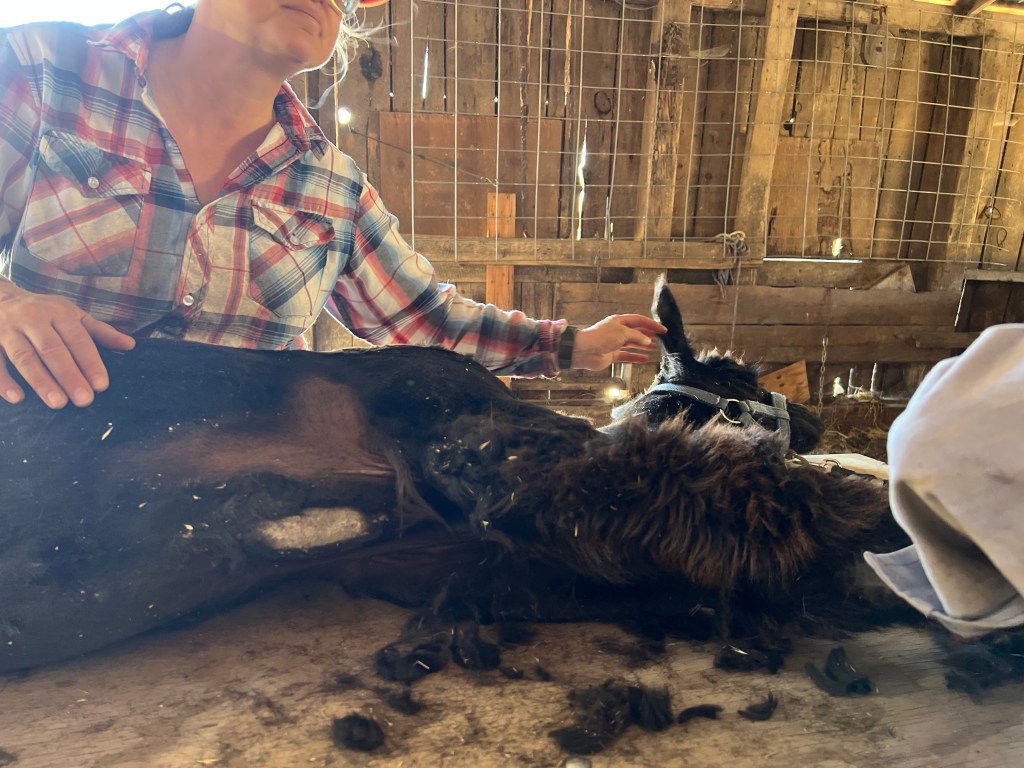
Now it was time for the real fun, catching the alpaca. The general concept is to get close enough to just sink your hand in their fiber and hold on until you can get a hold of the head and control the animal. It is fairly simple but not as easy to implement. After they got around us a couple of times and some yelling occurred we pushed them into the corral then waded in and got one. Now you put the halter on and the animal needs to be walked/drug over to the shearing table. It really depends on how old they are and whether they are halter trained. Our old alpaca are not halter trained. The only training they have is learned inherently, passive aggressive transport. The minute you get a hold of them they lay down on the ground! They cannot be drug across the ground as you are trying to keep them fairly clean. So they have to be lifted up by two people and carried to the shearing table then thrown on. Luckily, Daughter #2 has been working out and can squat 80+ Kg. She needed all of that muscle to help get the alpaca up onto the shearing table. Once up on the table we had to tie down their head then stretch out their feet so they looked like they were on a medieval torture device then the shearing could begin.

We started off easy with an old one, he laid there fairly well, we trimmed his toes as he was getting sheared and the shears worked well. It only took about 45 minutes. We did not need to grind his lower teeth flat and no fighting teeth needed cut off. The next one was a baby who had never been tied to a table or sheared before. Holy smokes, their fiber is totally different than an old alpaca. It has a ton of crimp, it is very thick and very long. It was very hard to shear, I had to keep oiling the blades and adjusting them constantly to get them to cut correctly. I ended up having to change the blades through midway on each young alpaca. We did all three yearlings and four old alpaca in seven hours. I was shot after that, my lower back was killing me from reaching out and shearing.

The yearlings absolutely hated the shearing table and being tied down. They kept panicking and kicking and getting untied. At one point, we had one standing up on the table and had to pull it back down, stretch it out and tie it back down again. It was brutal. Annmarie is going to make some alpaca sized hobbles so when we put them on and pull them from the center they will self tighten and if the alpaca fight they will tighten some more. After doing three yearling we contemplated whether paying to have them sheared is a viable option. Our real problem is there are 12 of them now!

The next day we all determined that more alpaca work should wait until the following weekend and all of us have had some time to recover. I ended up going over to the neighbors and baling 120 bales of grass. He had a patch that went to seed and was dry so I was unable to bale it. It was tall and green at one point, I just could not get to it. I still have one small field at another neighbor’s house but it needs to not be 108 F outside so I can go over at cut and bale it.

A week later we went out and finished the last five alpaca, our two new older alpaca were also a pain in the behind. They were used to being sheared but they were very scared during it. Padre is our biggest alpaca and he is twice the size of some of them. He was not very cooperative and he had to lift him up onto the table, it was at this point that Monica’s ability to deadlift really came in handy! Between the two of us we were able to force him up onto the table with people power (ie manhandle).

It is always amazing to see how small the alpaca really are after they are sheared. We really needed to do it a month earlier but haying kept delaying it.